Stories · Culture
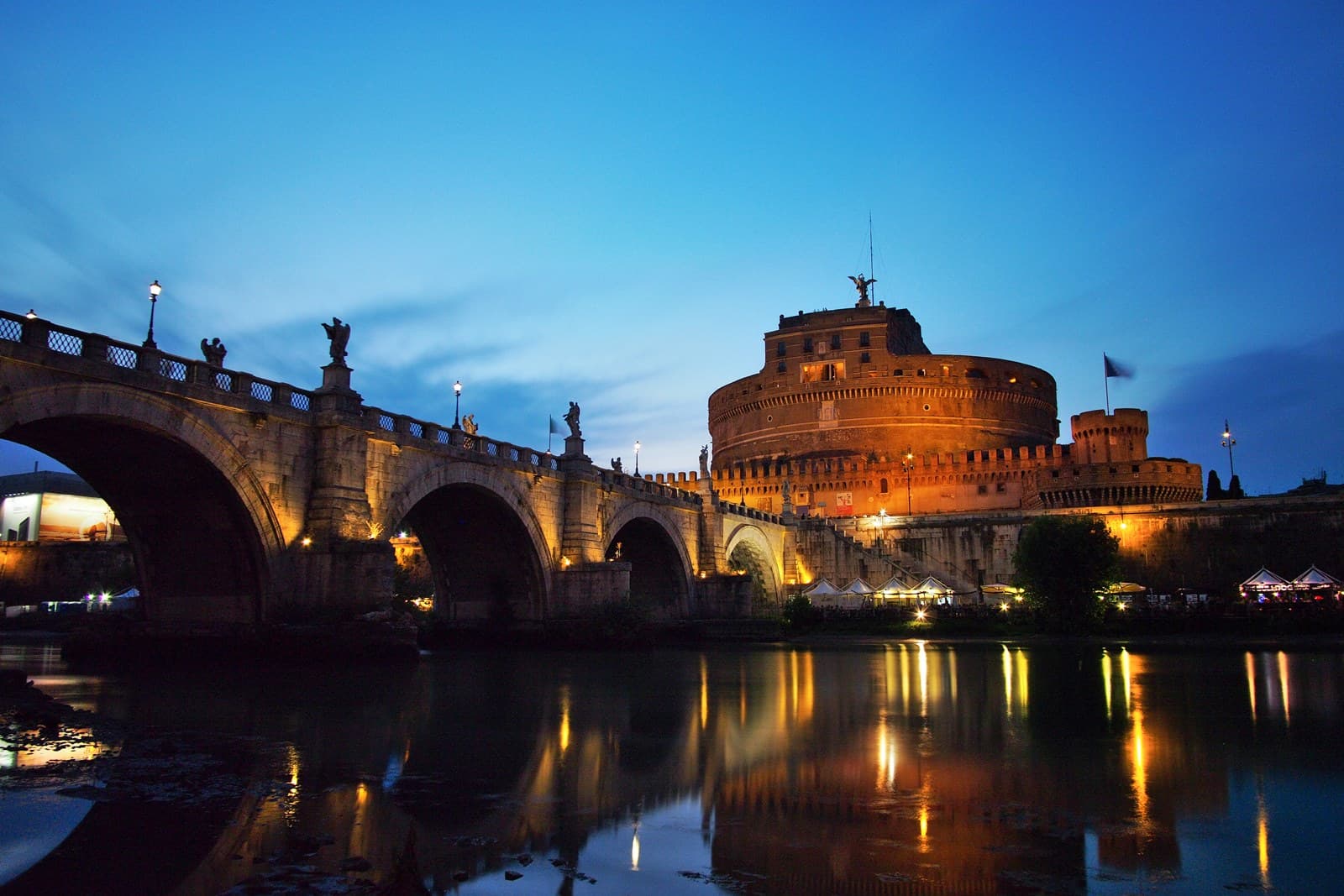
Tosca and Castel Sant'Angelo
The opera, the leap, the bells — Puccini, 1900
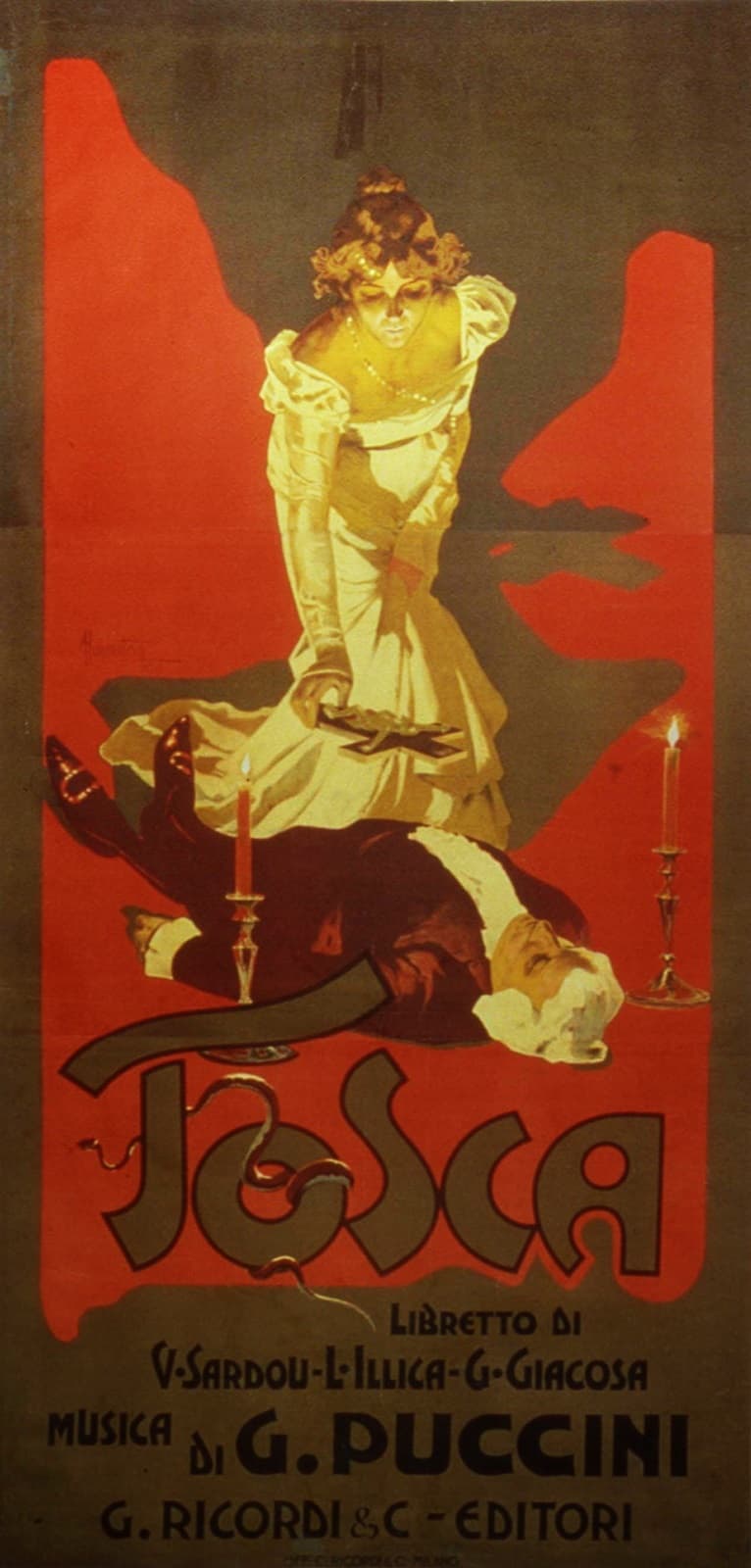
Quick answer: The third and final act of Giacomo Puccini's Tosca takes place on the rooftop of Castel Sant'Angelo at dawn. The painter Mario Cavaradossi awaits execution and sings “E lucevan le stelle”; the singer Floria Tosca arrives believing she has saved him through a fake firing squad; the firing squad is real; learning that the body of police chief Scarpia (whom she has just murdered) has been discovered, Tosca cries “O Scarpia, avanti a Dio!” and throws herself from the battlements. Puccini visited the castle in person to record the pitch of the matins bells. The opera premiered at the Teatro Costanzi in Rome on 14 January 1900.
More people have heard of Castel Sant'Angelo because of Tosca than because of any pope.
That is not literally true, of course — the castle has been a Roman mausoleum, a papal fortress, a treasury and a prison for almost 1,900 years. But for the millions of opera audiences who have sat through Puccini's third act since 1900, the building is, before anything else, the place where Tosca jumps. The leap from the battlements is one of the most famous moments in the entire operatic repertoire, and the rooftop where it happens is real, visitable, and is the same Terrace of the Angel you can stand on today.
Puccini knew exactly what he was doing when he set the third act here. Castel Sant'Angelo is the only one of the three locations in Tosca — alongside Sant'Andrea della Valle and Palazzo Farnese — that combines a sacred architectural silhouette, a working prison, and a public execution site, all on a single rooftop overlooking the Tiber. The composer wanted the opera to end somewhere the audience would know was once a real place where real people died. He also wanted the bells to be exactly the bells of this castle, at this hour of the morning.
This is the story of why the opera ends here, what happens in the third act, and how Puccini stitched the actual sound of Castel Sant'Angelo into one of the most performed scores in the world.
Three real locations, three faces of Rome
Each of the three acts of Tosca is set in a real, named, identifiable building in central Rome. This is unusual for nineteenth-century opera, which preferred generic palaces and abstract gardens. Puccini and his librettists, Giuseppe Giacosa and Luigi Illica, did the opposite: they staged the entire opera in places that anyone in Rome in 1900 could walk past on the way to the theatre.
The choice was deliberate, and the three buildings together form an argument:
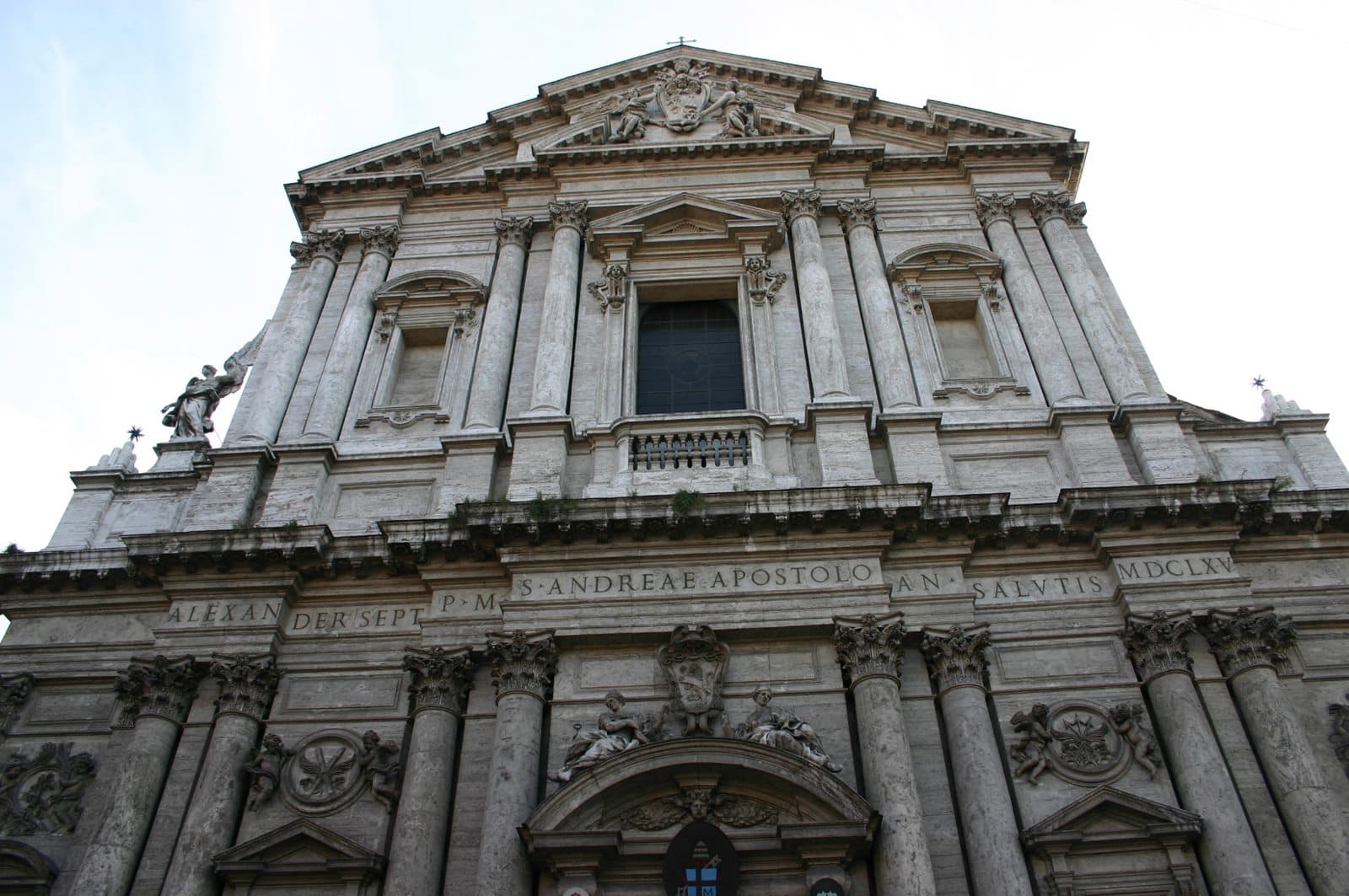
- Act I — the church of Sant'Andrea della Valle, near Largo di Torre Argentina. The escaped political prisoner Cesare Angelotti hides here; the painter Cavaradossi is at work on a Magdalene; Tosca arrives with her jealous suspicions.
- Act II — the apartment of police chief Baron Scarpia inside Palazzo Farnese, off Campo de' Fiori. Cavaradossi is interrogated and tortured; Tosca, blackmailed, agrees to give herself to Scarpia in exchange for her lover's life; she stabs him to death.
- Act III — the rooftop of Castel Sant'Angelo at dawn. Cavaradossi is brought up for execution; Tosca arrives with what she thinks is a safe-conduct; the execution turns out to be real; Tosca jumps.
Together, the three locations represent church, palace and prison. They are the three institutions through which power flows in 1800 papal Rome: the religious authority of the Church, the secular machinery of aristocratic government in the Palazzo Farnese, and the brutal infrastructure of the Papal States' police and judicial system in Castel Sant'Angelo. Each act is the protagonists colliding with one of those institutions in turn. By Act III, they have nowhere left to go but up to the roof.
What happens at Castel Sant'Angelo in Act III
The act takes place in approximately the time it takes to read this section. It is the shortest of the three acts and also the most concentrated.
Dawn over the castle
The curtain rises before sunrise on the platform of the castle — the upper terrace, just below the bronze statue of the Archangel. The orchestra plays the bells of Roman matins, drawn from the actual sound of the city at that hour. A young shepherd boy, off-stage, sings a melancholy aria in Roman dialect (romanesco), with text written specifically for the opera by the Roman dialect poet Luigi Zanazzo. The effect is naturalistic and unsettling: an opera audience in 1900 would have recognised the dialect immediately as the speech of the streets just outside the theatre.
“E lucevan le stelle”
Cavaradossi is brought up to the platform by the jailer and given an hour to write a final letter to Tosca. He bribes the jailer to deliver it. As he tries to write, he is overcome by memories of his last night with her. He sings the aria “E lucevan le stelle” — “And the stars were shining” — one of the most famous tenor arias in opera, mourning the past happiness he is about to lose forever. The aria ends with the line “e muoio disperato” — “and I die in despair”.
The fake execution that wasn't fake
Tosca arrives. She has Scarpia's safe-conduct in her hand and has, only hours earlier, killed Scarpia in his apartment to obtain it. She tells Cavaradossi the plan: the firing squad will fire blanks; he must fall convincingly; afterwards they will flee Rome together.
The firing squad arrives. They take their positions. They fire. Cavaradossi falls. Tosca, who has been watching tensely from a casemate, waits until the soldiers have left, then rushes to him.
He is dead. Scarpia's “mercy” was a final cruelty: the bullets were real.
The leap from the battlements
Voices are heard below. Scarpia's body has been found in his apartment. Soldiers are coming up the stairs to arrest Tosca for his murder. She climbs onto the parapet of the terrace, and turning towards the sky, she cries her last line: “O Scarpia, avanti a Dio!” — “O Scarpia, before God [we shall meet]!”
She jumps. The orchestra reprises the melody of “E lucevan le stelle”, in fortissimo. Curtain.
From dawn to leap, the act lasts about thirty minutes.

Where Tosca actually jumps from
This is the question every visitor to Castel Sant'Angelo asks at some point during their visit: where exactly does she jump?
The libretto specifies la piattaforma — the platform — and most stage productions visualise this as the upper terrace just below the Verschaffelt bronze angel. That is the same Terrace of the Angel where you can stand today, the highest accessible point of the castle, with a parapet looking down towards the Tiber. The drop from the parapet to the embankment of the river is approximately fifty metres.
In reality, the geography of the act is slightly more complicated than that. The libretto and stage directions also reference a casemate — a small enclosed firing position — from which Tosca watches the execution. There is no single “Tosca's casemate” identified historically inside the castle, but the bastion-level fortifications around the upper terrace contain several similar enclosures, any of which could plausibly be the visual reference.
The end of the opera, where she actually jumps, is unambiguous in stage tradition: it is from the upper terrace, on the parapet near the angel.
A leap of fifty metres, into the Tiber?
An old Roman superstition, repeated by tour guides for over a century, says that Tosca lands in the Tiber. She does not. The terrace is set well back from the embankment, and the river is on the other side of an entire wall of fortifications. In any literal reading of the geography, Tosca lands on the lower defensive walls, not in the water.
In the dramatic logic of the opera, this does not matter. She jumps to her death; what matters is the leap itself, not the landing.
Puccini's research at Castel Sant'Angelo
Of all the operas in the standard repertoire, Tosca is the one whose composer most insistently went to the actual locations to do research.
The most famous example is the bells. The opening of Act III opens before sunrise, with the bells of the Roman churches ringing for matins. Puccini wanted the score to capture the exact sound of those bells as they would be heard from the rooftop of Castel Sant'Angelo at five in the morning. He travelled to Rome, climbed up to the rooftop in person, and listened.
He took notes. He measured pitches. He identified which bells were closest, which were further, and at what offset they rang.
When he composed the opening of Act III, he wrote into the score the specific instruction that the bells be played on different sides of the stage at different distances, to recreate the spatial effect he had heard. He also commissioned new bells to be cast specifically for the opera, in pitches that matched what he had measured. The first production used eleven different bells played by five percussionists with two backstage conductors coordinating them.
The pitch of St Peter's great bell
Puccini did the same thing for the climactic Te Deum at the end of Act I, set inside Sant'Andrea della Valle. He researched the pitch of the great bell of St Peter's Basilica and wrote the orchestration of the Te Deum tuned to that exact frequency. Cardinal's processions, organ stops, the cadence of the Roman plainchant Te Deum — all of it was researched in person and built into the score.
The librettist Luigi Illica, in a letter to the publisher Ricordi after the premiere, complained that the obsession with authenticity had cost a great deal of money “and the audience does not even notice”. He may have been right about the audience. He was wrong about the result. The atmospheric texture of Tosca, especially in the third act, comes directly from this research, and is one of the reasons the opera continues to feel as immediate as it does, more than 125 years after the premiere.
Rome, June 1800: the historical setting
The action of Tosca takes place over a single day and night in June 1800, in a Rome only briefly reconquered by the Papal States after the collapse of the short-lived Roman Republic.
The political context is essential to understanding why all three principal characters are condemned. Cavaradossi is a Bonapartist sympathiser; Angelotti, the escaped prisoner whom Cavaradossi protects in Act I, is the former Consul of the fallen Roman Republic; Scarpia is the chief of police of the restored papal regime. The opera turns on the news that arrives in the middle of Act II: the army of the new restoration has, in fact, just been defeated by Napoleon at the Battle of Marengo on 14 June 1800.
Cavaradossi celebrates the news in front of Scarpia, which seals his fate: from that moment, Scarpia has him sentenced to death not as a sympathiser but as an active enemy of the regime. Tosca, in turn, agrees to Scarpia's blackmail in the hope of saving him.
Castel Sant'Angelo plays its real historical role here, exactly as it operated in the period. It was the working prison and execution site of the Papal States, holding political prisoners and carrying out sentences. Cellini had escaped from it in 1538; Beatrice Cenci had been beheaded outside its walls in 1599; Cagliostro had been imprisoned in the Cagliostra in 1789. By 1800, the year of the opera, the building had nearly three centuries of being a working machine of papal justice. The audience of 1900 understood this immediately: the third act of Tosca is staged in the same building where actual executions had been carried out into the recent past.
From Sardou's play to Puccini's opera
Tosca was not originally an opera. It began life as a five-act stage play in French, La Tosca, by the playwright Victorien Sardou, premiered at the Théâtre de la Porte Saint-Martin in Paris on 24 November 1887 with Sarah Bernhardt in the title role. Bernhardt toured the play across Europe and the Americas through the late 1880s, and Puccini saw it in Milan in 1889.
He immediately wrote to his publisher, Giulio Ricordi, asking for the rights to adapt it into an opera. He described it in one letter as “the opera I need, one with no overblown proportions, no elaborate spectacle, nor will it call for the usual excessive amount of music”. The negotiation took years. By the time Puccini secured the rights, another composer (Alberto Franchetti) had already been offered them. Ricordi and the librettist Luigi Illica eventually persuaded Franchetti to release them, and Puccini took up the work after the premiere of La bohème in 1895.
The two librettists, Illica and Giuseppe Giacosa, compressed Sardou's sprawling five acts into the tighter three-act structure we know. They cut much of the political backdrop, sharpened the love triangle, and changed several locations, including the setting of Scarpia's death — in Sardou's play it happens in Scarpia's apartment inside Castel Sant'Angelo; Puccini and his librettists moved it to Palazzo Farnese to give the third act its monopoly on the castle.
They also added the most famous moments. The aria “Vissi d'arte” in Act II, which Puccini almost cut, is not in Sardou. The shepherd boy of Act III is not in Sardou. The bell research, of course, is not in Sardou. What survived from the play was the architecture of the plot. Everything else — the music, the atmosphere, and three of the most famous arias in opera — is Puccini.
The arias of Tosca
Three arias from Tosca are part of the absolute first rank of operatic repertoire. All three are now strongly associated with the locations they were written for.
“Recondita armonia” — Act I, Sant'Andrea della Valle
Cavaradossi's first aria, sung in front of his unfinished painting of the Magdalene. The text reflects on the contrast between the blonde, blue-eyed model in his picture and the dark beauty of Tosca, his lover. It is a tenor showpiece and is often the first impression an audience gets of Cavaradossi.
“Vissi d'arte” — Act II, Palazzo Farnese
Tosca's great aria, sung in despair as Scarpia closes in on her sexually. The text begins “Vissi d'arte, vissi d'amore” — “I lived for art, I lived for love” — and is one of the most famous soprano arias in the repertoire. Puccini almost cut it from the opera; Ricordi insisted it stay.
“E lucevan le stelle” — Act III, Castel Sant'Angelo
Cavaradossi's second aria, sung on the rooftop of the castle as he writes his farewell letter and waits for the firing squad. The text mourns the past happiness with Tosca: the stars that shone, the earth that gave its scent, her hand on his. The melody is reprised in fortissimo by the orchestra at the very end of the opera, after Tosca's leap. By that point, the audience has heard the same melody in three different emotional registers in the space of forty minutes, and it is the music that sends them out of the theatre.
All three arias are still routinely sung at concerts and broadcast on classical radio. “E lucevan le stelle” is the one most often associated with Castel Sant'Angelo specifically, and is the one tour guides will sometimes hum to themselves at the top of the terrace.
The myth of the bouncing diva
Of all the legends attached to Tosca, the most persistent is the story of the bouncing diva.
The premise: a stagehand, anxious about the safety of the soprano playing Tosca, builds an unusually generous landing of mattresses for her leap from the parapet. The mattresses are too springy. The soprano, having thrown herself from the battlement, bounces back up into view of the audience — sometimes once, sometimes several times, sometimes (in the most embellished tellings) waving at the conductor before disappearing again.
The story has been attached over the years to almost every famous Tosca of the twentieth century. It has been told about Eva Turner, Maria Jeritza, Maria Callas, and a long list of less well-known sopranos, in venues ranging from La Scala to provincial Italian opera houses to a college student production in Texas. The earliest version reliably documented is in a 1941 article. The variations differ; the structural anecdote is identical.
No specific instance has ever been confirmed by surviving witnesses, recorded review, or production logbook. The story is almost certainly an opera-house joke that solidified into a piece of folklore, then retroactively attached itself to whichever Tosca a given audience happened to have just seen. Like many opera legends, it survives because it is too entertaining to fact-check.
In the dramatic universe of the opera, of course, none of this happens. Tosca falls, the music rises, the curtain comes down.
Tosca and the castle today
The opera has never gone away. Tosca is one of the most performed works in the international operatic repertoire, with several major productions in any given year at the Metropolitan Opera, the Royal Opera House, La Scala, the Wiener Staatsoper, and the Teatro dell'Opera di Roma — the latter often within walking distance of the actual settings of the opera.
In Rome itself, several semi-staged and chamber productions are regularly performed in churches and small venues near Castel Sant'Angelo, with the castle visible from the audience or the performance space. These tend to play heavily on the proximity, sometimes scheduling Act III to coincide approximately with the actual matins bells outside.
The castle museum itself does not host operatic productions of Tosca on the rooftop — the upper terrace is a protected monument and the logistical and conservation issues would be considerable. However, the Direzione Musei Nazionali di Roma has run themed cultural events tied to the opera over the years, and Tosca consistently appears in the explanatory material the museum distributes about the third act.
For most visitors, the encounter with Tosca at Castel Sant'Angelo is simpler than any of that. You climb up to the terrace, look down over the parapet at the river and St Peter's and the angels of the bridge, and at some point during the next thirty seconds of staring at the view, the recognition lands: this is the place where she jumps.
Continue exploring
Frequently asked
Where does Tosca jump from at the end of the opera?
In the libretto and stage tradition, Tosca leaps from the upper platform of Castel Sant'Angelo, just below the bronze statue of the Archangel Michael. This is the same Terrace of the Angel that visitors can reach today, the highest publicly accessible point of the castle. The drop is approximately fifty metres to the lower fortifications below.
What does Tosca shout before she jumps?
Her final line is “O Scarpia, avanti a Dio!” — “O Scarpia, before God!” She is invoking her appointment with Scarpia, the police chief she has just murdered, before the divine judgment of God. In Sardou's original 1887 play, her last words are addressed to the soldiers (“I am going, scoundrels!”); Puccini and his librettists rewrote the ending to make her last words a direct challenge to her dead enemy.
Is the Castel Sant'Angelo of Tosca the real castle in Rome?
Yes. All three settings of the opera are real, named buildings in central Rome: the church of Sant'Andrea della Valle (Act I), Palazzo Farnese (Act II), and Castel Sant'Angelo (Act III). Puccini researched all three locations in person before composing the score. The third act is set on the upper rooftop terrace of the castle, which is the same space visitors can reach today as part of the standard museum route.
When does the opera Tosca take place?
The action of Tosca takes place over a single day and night in June 1800, in Rome under the restored Papal States. The libretto specifies 17 June 1800 (Sardou's play indicates 14 June 1800, the day of the Battle of Marengo, in which Napoleon's army defeated the Austrians; the news of Marengo arrives during Act II of the opera and triggers Cavaradossi's death sentence).
Did Puccini really visit Castel Sant'Angelo before composing Tosca?
Yes. Puccini was famously meticulous about local atmospheric authenticity in his operas and travelled to Rome specifically to study the matins bells of Castel Sant'Angelo as they would be heard from the rooftop at dawn. He noted the pitches, the spacing and the temporal offset of each bell, then reproduced the effect in the score and commissioned new bells to be cast in the right pitches for the premiere production. He also researched the great bell of St Peter's Basilica in person to set the harmonic centre of the Te Deum at the end of Act I.
When and where did Tosca premiere?
Tosca premiered at the Teatro Costanzi in Rome on 14 January 1900. Puccini insisted on a Roman premiere because the opera is set in Rome. The opening was originally scheduled for 13 January but was postponed by a day because of an anarchist bomb threat. Italy's queen and prime minister attended the premiere; the conductor was instructed to strike up the royal march if any disturbance occurred during the performance. The opera was a popular success; many critics objected to what they considered the brutality of the plot.
Is the “bouncing Tosca” story true?
There is no confirmed instance of a soprano bouncing back into view after the leap. The story has been told about Eva Turner, Maria Jeritza, Maria Callas and many others, but no production logbook, contemporary review or surviving witness has ever specifically documented one of these incidents. It is almost certainly an opera-house legend that solidified into folklore and is now retroactively attached to many famous Toscas.