Angels & Demons at Castel Sant'Angelo — The Real Locations
Quick answer: In Dan Brown's 2000 novel Angels & Demons and the 2009 Ron Howard film adaptation, Castel Sant'Angelo appears as the "Church of Illumination" — the secret meeting place of the Illuminati and the site of the novel's climax. Robert Langdon, played by Tom Hanks, follows the Path of Illumination across Rome through four churches marked by Bernini sculptures, before confronting the Hassassin inside the castle and escaping through the Passetto di Borgo to the Vatican. All four churches and the castle are real places that can be visited today.
Angels & Demons is one of the most commercially successful thrillers of the last twenty-five years.
Dan Brown published the novel in 2000, one year before The Da Vinci Code. It sold over 39 million copies worldwide. The Ron Howard film adaptation, released on 15 May 2009, grossed $485.9 million against a $150 million budget. Hans Zimmer scored it.
Both the book and the film climax at Castel Sant'Angelo. For readers who finish the book or leave the cinema wondering "where is this, really?" — this is the answer.
The plot, in short
A physicist at CERN is murdered and branded with the word "Illuminati." A canister of antimatter has been stolen. It is now somewhere in Vatican City, set to detonate at midnight.
Harvard symbologist Robert Langdon is summoned to Rome. The papal conclave has just begun, and four preferiti— the cardinals most likely to be elected pope — have been kidnapped. The Illuminati threaten to kill one each hour.
Each of the four cardinals is to die at a different location in Rome, on what the Illuminati call the Path of Illumination. Each location is linked to one of the four classical elements: Earth, Air, Fire, Water.
At each of them, a sculpture by Gian Lorenzo Bernini points the way to the next.
The Path of Illumination: four real churches in Rome
The four altars of the Path of Illumination are all real places in Rome. Langdon races between them while the clock counts down to the antimatter explosion. Here is where each one is — and what actually happens there in the book and the film.
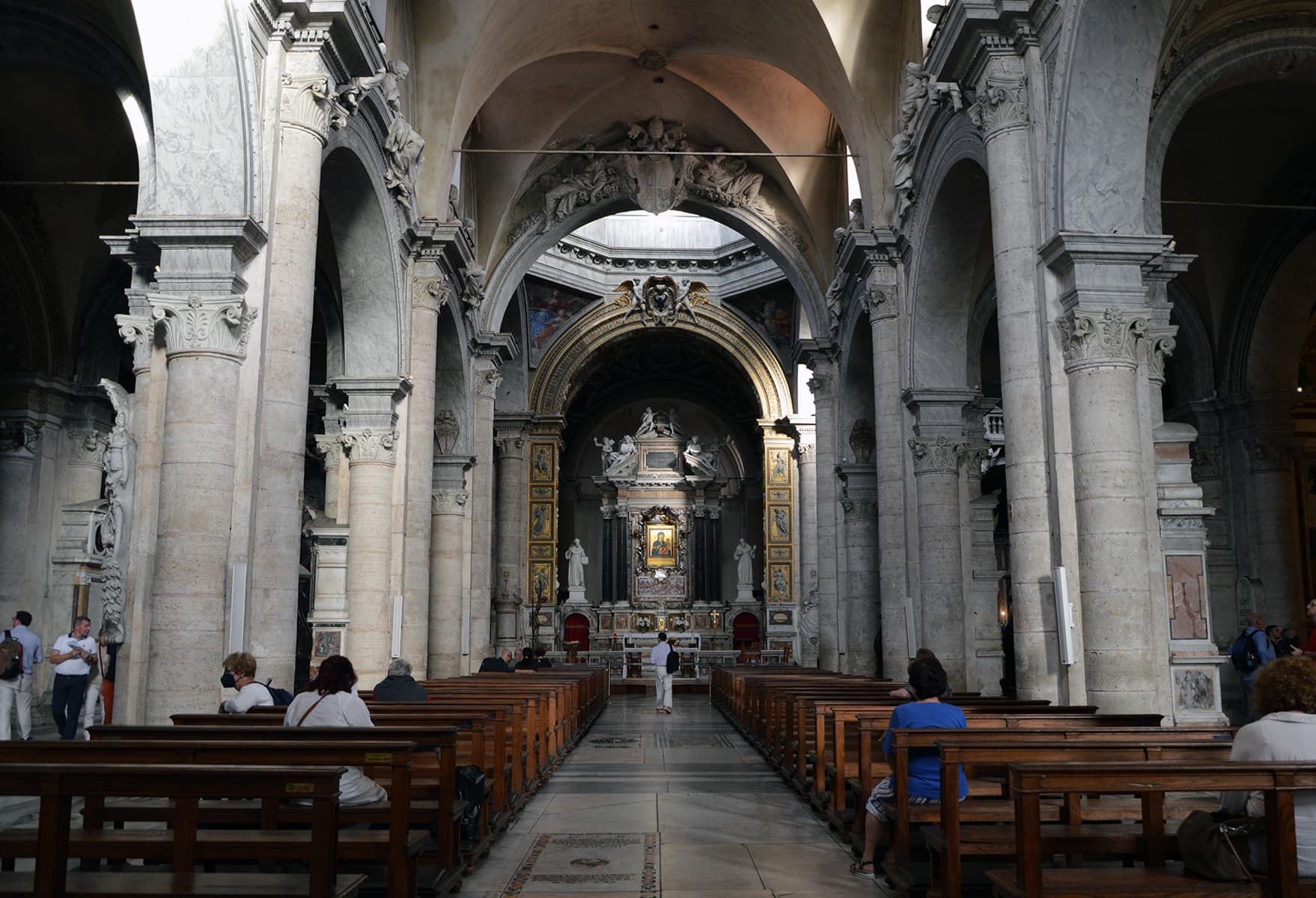
Earth — Santa Maria del Popolo
The first altar of the Path is the Chigi Chapel, inside the basilica of Santa Maria del Popolo, on the north side of Piazza del Popolo.
The chapel was designed by Raphael. It contains sculptures by Bernini of Habakkuk and the Angel — and it is the angel's pointing finger that, in the novel, indicates the next stop.
The first cardinal is found here, suffocated with earth pushed down his throat and branded with an ambigram of the word "Earth."
Air — Saint Peter's Square
The second altar is in plain sight of millions of visitors every year: a stone relief embedded in the paving of Piazza San Pietro, the Vatican's great colonnaded square.
The relief is called the West Ponente. It depicts the west wind as an angel blowing outward from the Vatican. In the novel, it marks the "Altar of Air."
The second cardinal is found here with his lungs punctured.
Fire — Santa Maria della Vittoria
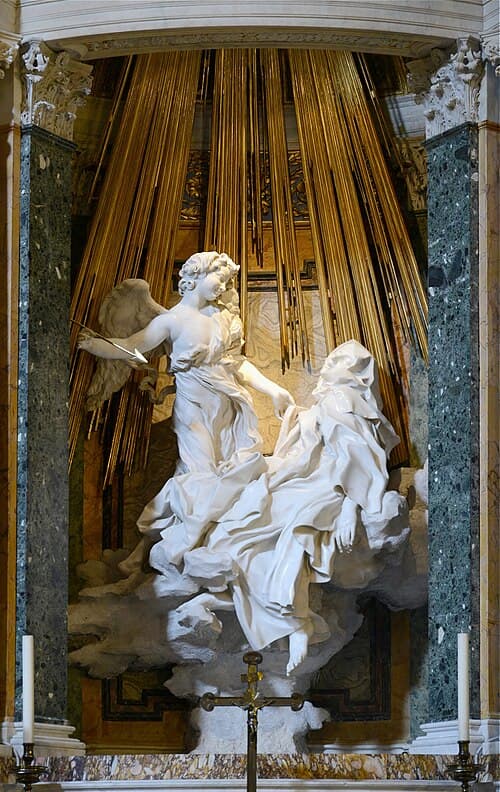
The third altar is one of the most famous sculptures in Rome: Bernini's Ecstasy of Saint Teresa, in the Cornaro Chapel of the church of Santa Maria della Vittoria.
In the novel, this is the "Altar of Fire." The third cardinal is suspended from the ceiling and set alight. In the film, the pews below him also catch fire, and the scene is one of the most visually intense in the movie.
Water — Fontana dei Quattro Fiumi
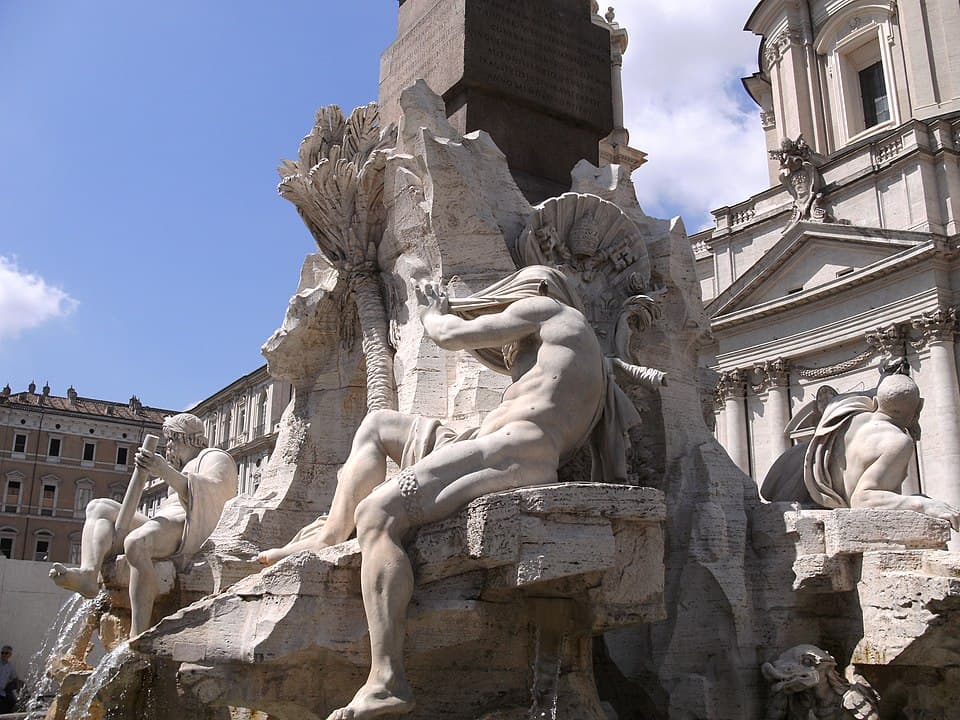
The fourth altar is Piazza Navona, the most celebrated square of baroque Rome.
At its centre stands Bernini's Fountain of the Four Rivers, unveiled in 1651. Four colossal figures represent the four major rivers of the continents known at the time: the Nile, the Ganges, the Danube, and the Río de la Plata. Above them rises an Egyptian obelisk topped with a dove.
In the novel, this is the "Altar of Water." The fourth cardinal is drowned in the fountain — and the dove on top of the obelisk points to the final destination: Castel Sant'Angelo.
Castel Sant'Angelo: the Church of Illumination
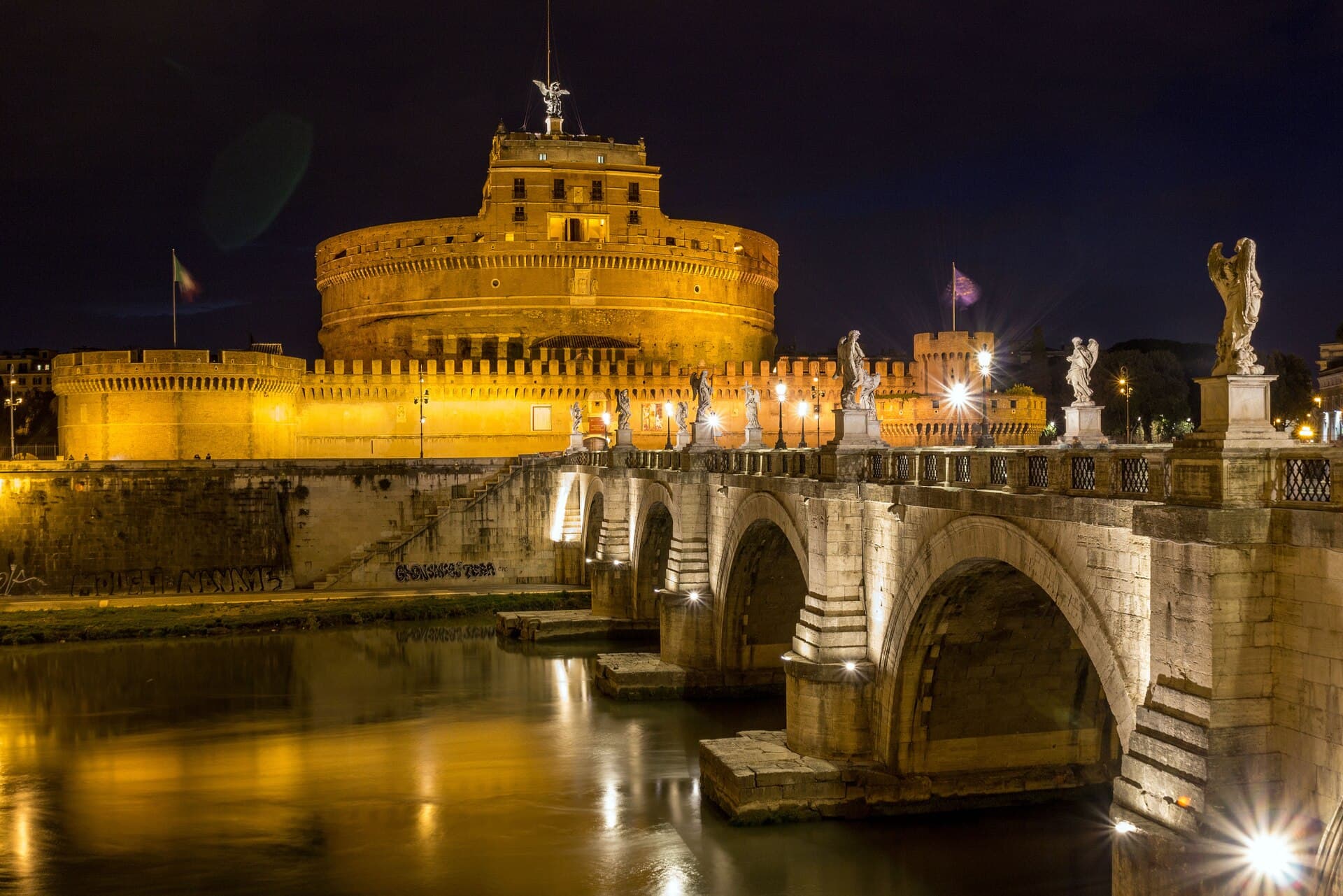
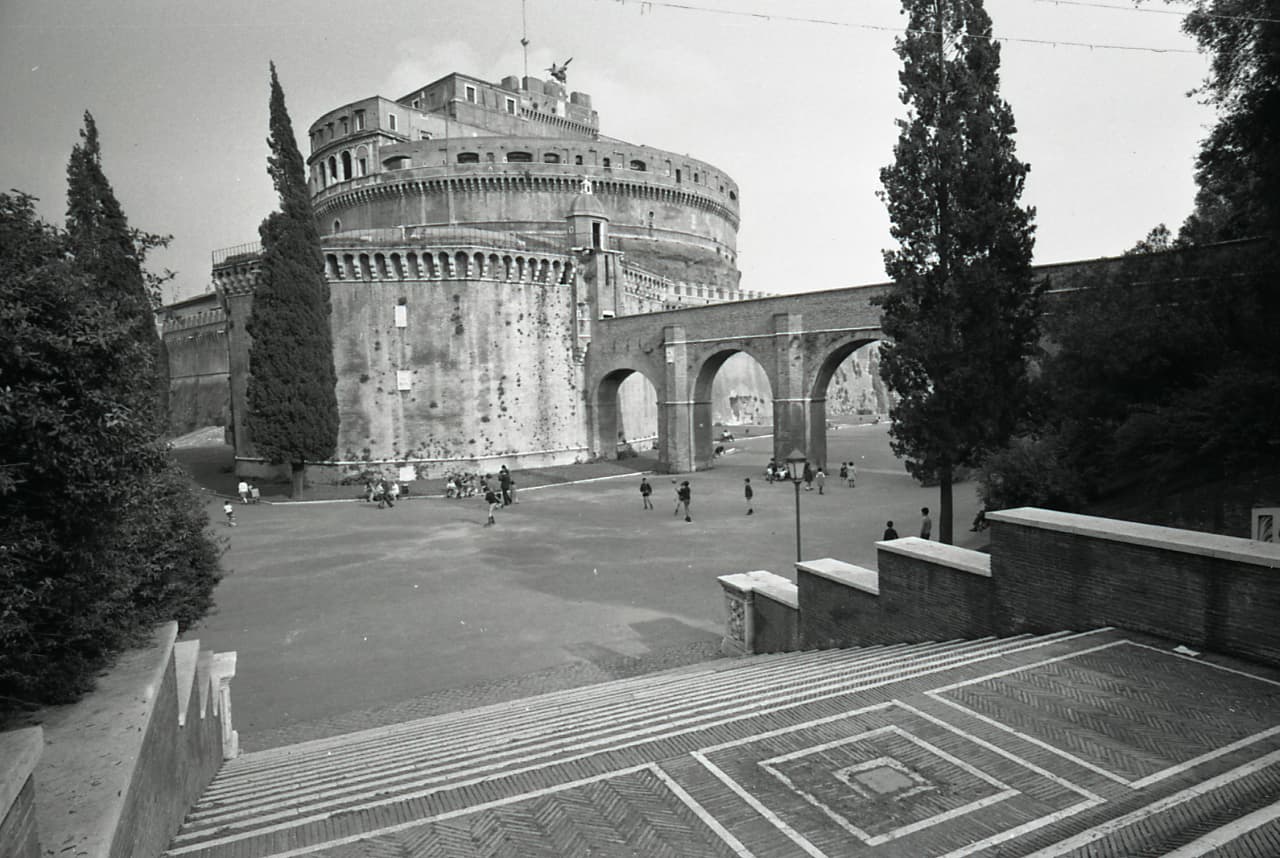
In the novel, Brown identifies the castle as the "Church of Illumination": the secret meeting place of the Illuminati across four centuries.
The identification is fiction. The real Castel Sant'Angelo was never a meeting place of the Illuminati — a movement that existed briefly in eighteenth-century Bavaria under Adam Weishaupt, not in Renaissance Rome. But the castle is real, and much of what Brown describes about it is accurate.
Originally the mausoleum of Emperor Hadrian, built in 139 AD, the cylindrical fortress became a papal castle in the Middle Ages and a papal prison from the Renaissance onward. Its ramparts saw the escape of Benvenuto Cellini in 1538, sheltered Pope Clement VII during the Sack of Rome in 1527, and held Beatrice Cenci before her execution in 1599.
The climactic scene
In the novel, the Hassassin kidnaps Vittoria Vetra and brings her to the upper levels of the castle. Langdon pursues. After a long confrontation on the ramparts, Vittoria pushes the Hassassin over the parapet.
He falls hundreds of feet onto a pile of ancient marble cannonballs in the courtyard and dies.
The film adaptation diverges here. The assassin is killed by a car bomb outside the castle instead. But the location — the upper ramparts of Castel Sant'Angelo, with their real views of the Tiber and St Peter's — remains the same.
The Passetto di Borgo: the final race
After defeating the Hassassin, Langdon and Vittoria have minutes to warn the Vatican before the antimatter detonates.
They find the Passetto di Borgo: the 800-metre medieval corridor built into the Vatican walls, linking the castle to the papal apartments. Built in 1277 as an escape route for popes in danger, it had been used in 1494 and 1527 to save pontifical lives. In the novel, it serves the reverse function: a way in, not a way out.
Brown describes the Passetto as a "tunnel." It is not. It is an elevated covered walkway running above the streets of the Borgo district, with watchtowers along its length.
This is one of the book's most criticised inaccuracies, given that Brown claimed in his author's note that all locations in the novel are "entirely factual."
How to walk the Passetto today
The Passetto has been accessible to the public intermittently since 2000. As of December 2024, it is part of a permanent program of guided tours, including evening visits.
Access is combined with standard entry to Castel Sant'Angelo plus a supplemental guided tour ticket. The full stretch — from the Torre del Mascherino at Piazza della Città Leonina to the Bastione San Marco at the castle — is walkable.
What is real, and what is fiction
Brown's author's note claims that "references to all works of art, tombs, tunnels, and architecture in Rome are entirely factual."
This is mostly true. With several important exceptions.
What is accurate
- The four churches and their art exist exactly as described.
- Bernini's sculptures are real, correctly attributed, and in the locations named.
- Castel Sant'Angelo, the Passetto, and the Vatican Secret Archives all exist.
- The Vatican conclave procedure is broadly accurate, though dramatised.
What is inaccurate
- The Illuminati in the novel bears little resemblance to the historical Bavarian Illuminati of 1776–1785. The idea of a centuries-old conspiracy including Bernini and Galileo is fiction.
- The "La Purga" event referenced in the film — four Illuminati scientists branded and executed by the Church in 1668 — is invented.
- The Passetto is not a tunnel.
- Antimatter cannot be stored in the portable canisters described. CERN has produced only a handful of antimatter atoms in its history, and they exist for fractions of a second.
None of which detracts from the novel as fiction. But readers planning a trip to Rome should know that the buildings, sculptures, and streets are real — and that the conspiracy is not.
Walking the Path of Illumination today
For fans of the book or the film, the full route can be walked in about half a day at a comfortable pace.
Here is the standard order, starting from the north:
- Santa Maria del Popolo (Piazza del Popolo). Earth.
- Saint Peter's Square (Vatican City). Air. The West Ponente relief is in the paving.
- Santa Maria della Vittoria (near Piazza della Repubblica). Fire. Bernini's Saint Teresa is in the left transept.
- Piazza Navona. Water. The Fountain of the Four Rivers dominates the centre.
- Castel Sant'Angelo. The Church of Illumination. The climax.
Several operators in Rome run dedicated Angels & Demons walking tours that follow this sequence with historical and literary commentary. For visits to the castle specifically, standard guided tours of Castel Sant'Angelo cover most of the locations seen in the film's climax, including the ramparts and (when included) the Passetto.
Other appearances of Castel Sant'Angelo in popular culture
Angels & Demons is the most famous recent use of the castle as a fictional setting. It is far from the first.
The castle has had a particularly rich afterlife in three other works:
- Tosca, Giacomo Puccini (1900).The entire third act of the opera takes place on the ramparts of Castel Sant'Angelo at dawn. Tosca, unable to save her lover Cavaradossi from execution by firing squad in the courtyard, throws herself from the parapet in the final minutes of the work. It is one of the most famous endings in operatic history.
- Mission: Impossible III (2006). Ethan Hunt (Tom Cruise) infiltrates the Vatican using the Passetto di Borgo. The film uses the real castle and the real corridor, three years before Angels & Demons brought them to wider attention.
- Assassin's Creed II (2009) and Brotherhood (2010).The video games by Ubisoft feature a fully modelled Castel Sant'Angelo as a major location. The protagonist Ezio Auditore scales its walls, fights along the Passetto, and uses the castle as a setting for several key missions.
Each of these deserves a dedicated piece, and we will write them. For now, they stand as a reminder that Brown did not invent the castle's cultural appeal. He amplified it.