Castel Sant'Angelo
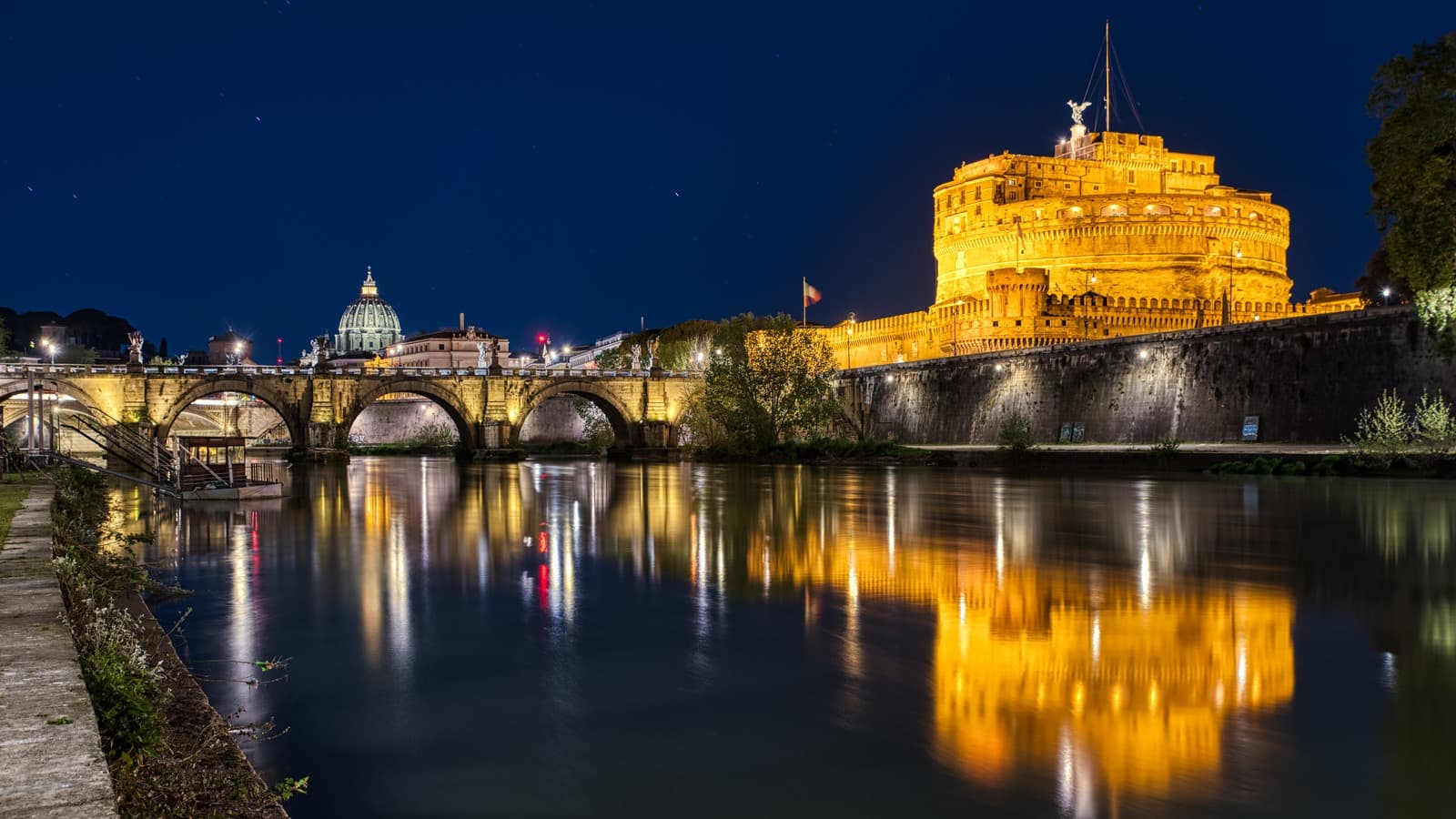
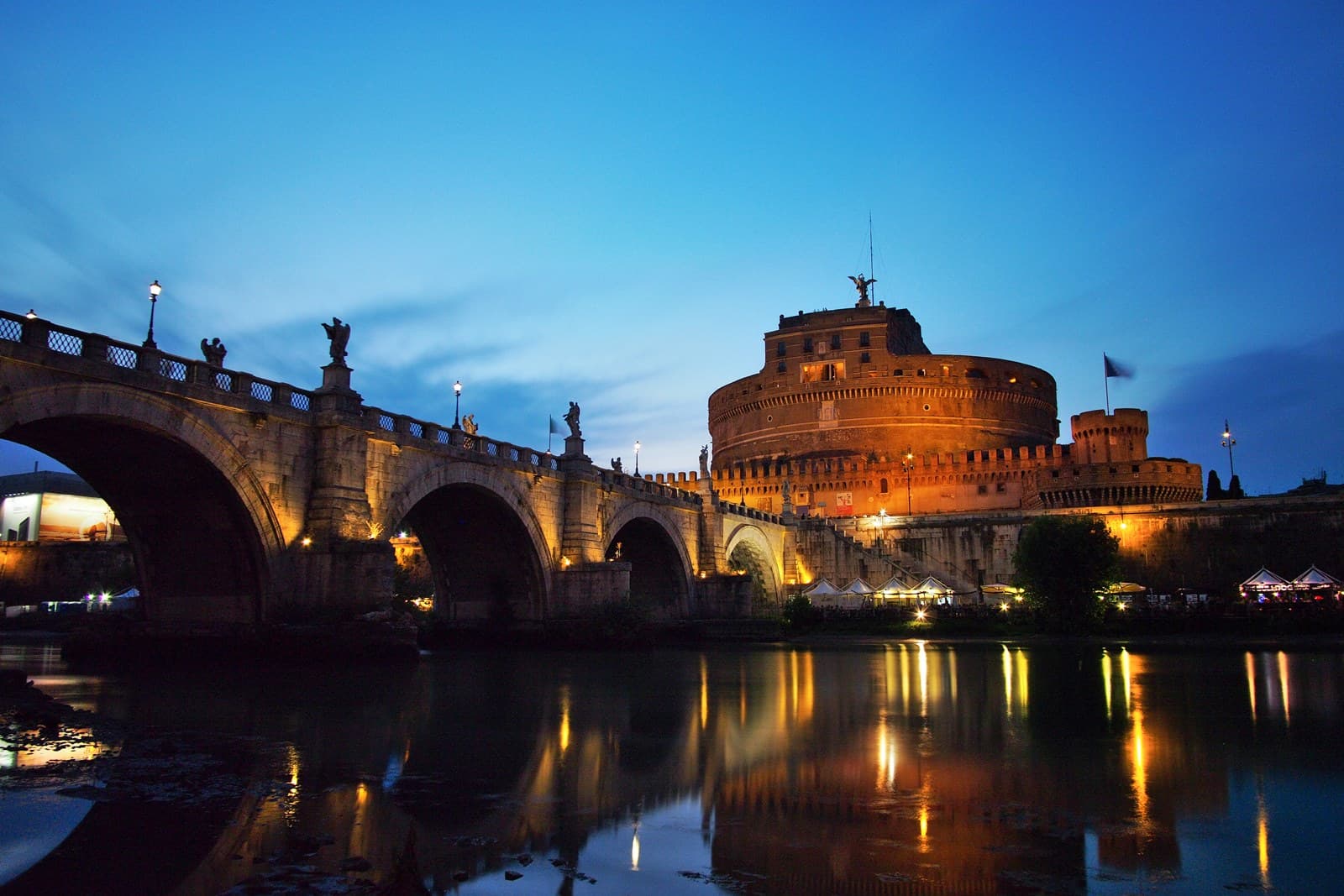
Castel Sant'Angelo Rome at night with Ponte Sant'Angelo and Bernini's angels — the Mausoleum of Hadrian on the right bank of the Tiber River

Castel Sant'Angelo

Rome, Italy — Since 139 AD

Key takeaways

  • Castel Sant'Angelo is a cylindrical fortress and museum in Rome, Italy, built in 139 AD as the mausoleum of Emperor Hadrian.
  • Open Tuesday to Sunday, 9:00 to 19:30 (last admission 18:00). Closed Mondays, January 1, December 25.
  • Standard adult entry costs €16. Free on the first Sunday of every month and for visitors under 18.
  • Most visitors spend 1.5 to 2 hours inside, covering the spiral ramp, the papal apartments, and the rooftop Terrazza dell'Angelo.
  • Address: Lungotevere Castello 50, 00193 Rome, Italy. The castle is on the right bank of the Tiber River, connected to the Vatican by the Passetto di Borgo.

For nearly two thousand years, one building has watched over the Tiber at the edge of Rome. It began as the mausoleum of an emperor, became the last refuge of popes, held prisoners whose names passed into Italian legend, and appeared in one of the most-read thrillers of the twenty-first century.

This is the complete, independently researched guide to Castel Sant'Angelo — tickets, history, floor plan, and the stories that made it famous.

Entry price
16
Recommended visit
Approximately 2 hours
Opening hours
Tuesday to Sunday, 9:00 AM to 7:30 PM (last admission at 6:30 PM). Closed on Mondays, January 1st, and December 25th.
Address
Lungotevere Castello 50, 00193 Rome, Italy

Quick facts

Built139 AD
FounderEmperor Hadrian
Original useImperial mausoleum
Levels5 + bastions
Annual visitors~1.2 million
Rank in Rome2nd most visited
CountryItaly

Recommended tours

Hand-picked tours, reviewed honestly and compared with alternatives.

Rome: Castel Sant'Angelo Guided Tour
GuidedSkip the Line

Rome: Castel Sant'Angelo Guided Tour

History enthusiasts seeking expert interpretation of Roman imperial architecture and its transformation into medieval ecclesiastical fortification.Art and architecture devotees interested in Renaissance frescoes, Baroque sculpture, and the visual evolution across centuries of occupation.Visitors with limited time wanting comprehensive access without independent navigation or lengthy waits at standard ticketing.

4.8 (114)2 hours
Rome: Castel Sant'Angelo Guided Tour
Guided

Rome: Castel Sant'Angelo Guided Tour

History enthusiasts seeking deep contextual knowledge of how military, ecclesiastical, and administrative functions shaped a single building's 2,000-year evolution.Photographers and architecture lovers wanting guided access to restricted chambers and the optimal terrace vantage point for the city skyline.Visitors with limited Rome time who want expert curation rather than self-guided wandering through 58 rooms across multiple levels.

4.7 (1,808)1 - 2 hours
Rome: Castel Sant'Angelo Entry Ticket & Digital Audioguide
Audio Guide

Rome: Castel Sant'Angelo Entry Ticket & Digital Audioguide

Independent travelers preferring flexible pacing over structured group dynamics, with strong interest in historical detail.Multilingual visitors seeking interpretive content in their native language rather than English-only commentary.Photography enthusiasts planning extended time on the rooftop terrace to capture Rome's monuments and architectural details.

4.7 (6,536)2 hours
Castel Sant’Angelo Guided Tour with Panoramic Views
Guided

Castel Sant’Angelo Guided Tour with Panoramic Views

History scholars and Renaissance art enthusiasts seeking contextualized understanding of architectural evolution and papal political strategy.Visitors interested in medieval military engineering and fortification design as illustrated through defensive structures and weaponry.Travelers planning extended Rome itineraries who can combine this tour with adjacent Vatican City and Tiber embankment exploration.Small groups desiring personalized narrative rather than large-group museum experiences, with flexibility across multiple time slots.

4.6 (657)1 - 5 hours
Rome Pre-Reserved Shared or Private Tour Castel Sant'Angelo
PrivateSkip the Line

Rome Pre-Reserved Shared or Private Tour Castel Sant'Angelo

History enthusiasts interested in papal Rome and Renaissance art, who benefit from informed commentary on frescoes and architectural evolutionVisitors with limited time seeking efficient coverage of major interior spaces without independent navigation confusionThose wishing to avoid general admission crowds while gaining contextual understanding of Hadrian's original intent versus later papal modifications

4.5 (86)75 minutes
Dark Heart of Rome: Facts, Legends, and Mystery Tour
Guided

Dark Heart of Rome: Facts, Legends, and Mystery Tour

History enthusiasts interested in Rome's macabre past, overlooked narratives, and the intersection of documented events with urban folkloreEvening leisure travelers seeking atmospheric nocturnal exploration of the historic city center with interpretive guidanceVisitors with strong walking ability who prefer smaller-group, specialized tours over mainstream daytime attractions

4.5 (124)1.5 hours

What to see inside Castel Sant'Angelo

Six architectural levels, the papal apartments, the prison cells, and the rooftop terrace. The rooms most visitors remember — with detailed guides to each.

Why visit Castel Sant'Angelo

Few buildings in Rome have lived as many lives as this one.

Known to Romans as the Mausoleo di Adriano or simply Mole Adriana, the structure also called Hadrian's Tomb, the Mausoleum of Hadrian or the Holy Angel's Castle began in 139 AD as the resting place of Emperor Hadrian, a drum of travertine and brick on the right bank of the Tiber River in the Borgo district, crowned with a garden and a colossal statue of the emperor in his chariot. Within two centuries it was a fortress. By the medieval period it had become a papal castle. By the Renaissance, a prison of the Papal States. Each successive use left its mark, and the castle visitors walk through today is a collage of all of them. The full sweep of those layers is captured in our 24-milestone timeline from Hadrian to the National Museum.

The monument gave shelter to Pope Clement VII during the Sack of Rome in 1527, when the imperial troops of Charles V overran the city and the pope escaped through the Passetto di Borgo — the elevated corridor that still connects the castle to the Vatican. It held Beatrice Cenci before her execution on the bridge below in 1599, and Count Cagliostro in his fresco-covered cell in 1790. It was the setting for Benvenuto Cellini's extraordinary escape in 1538, and the climax of Dan Brown's Angels & Demons.

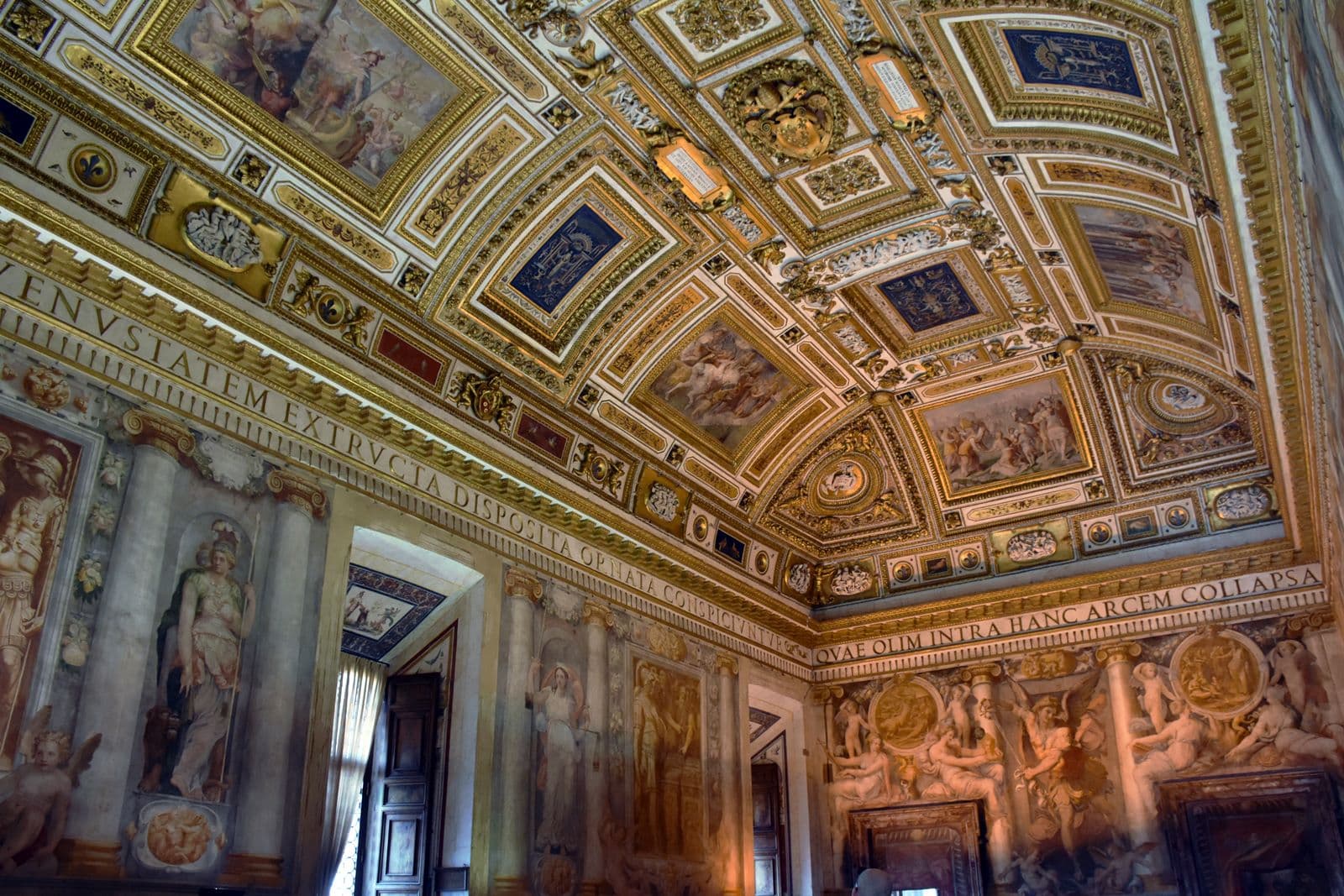
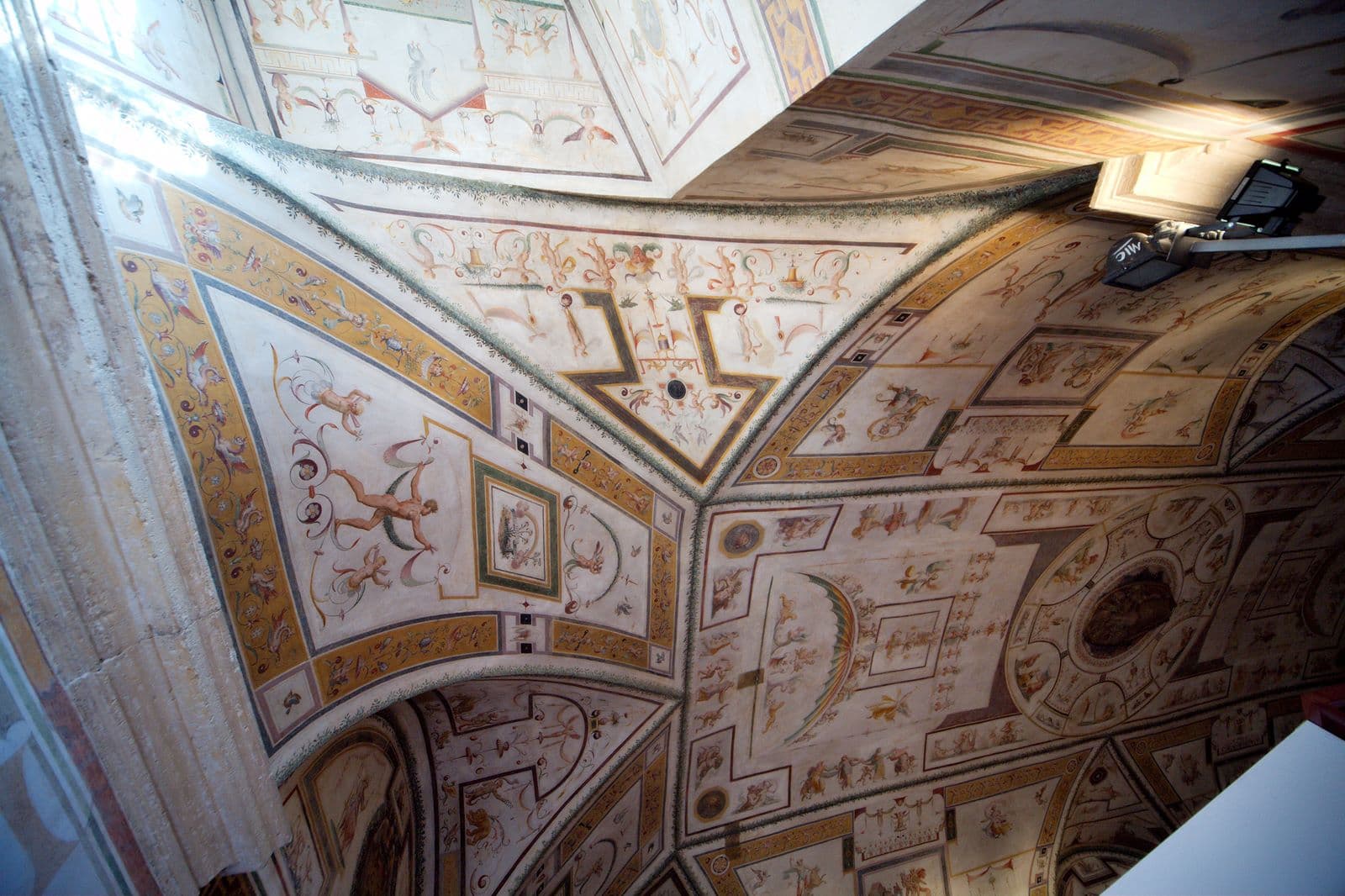
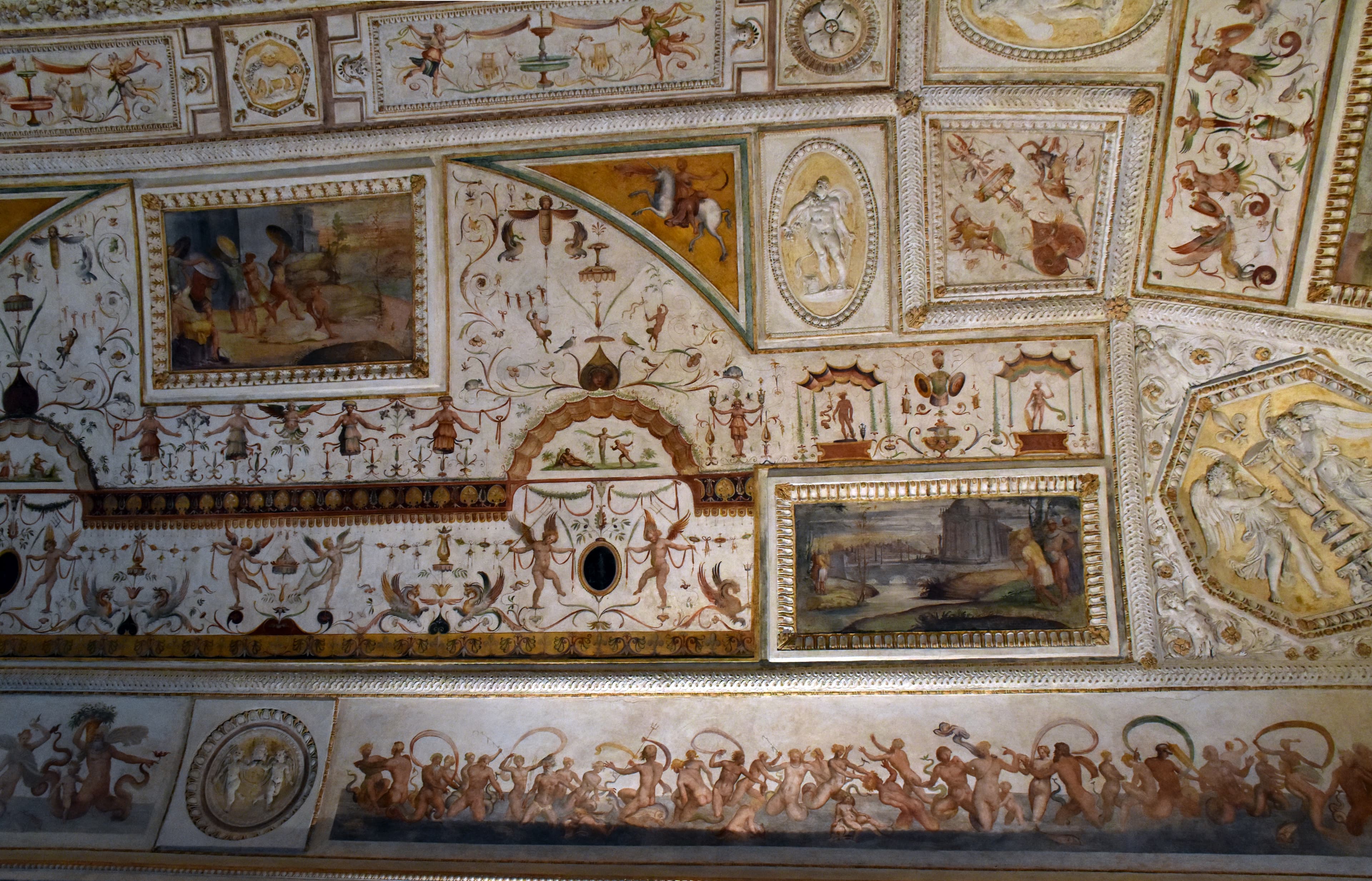
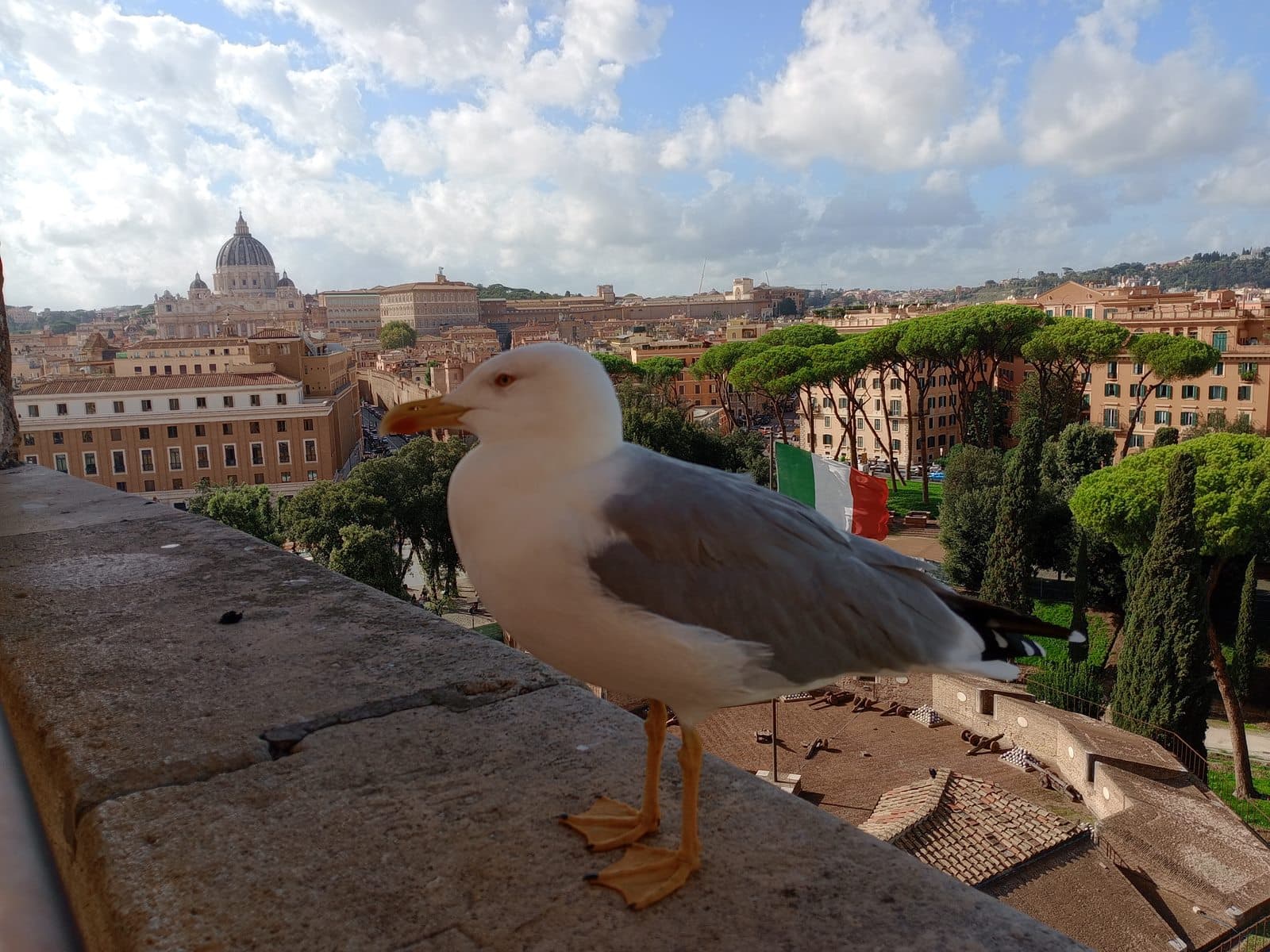
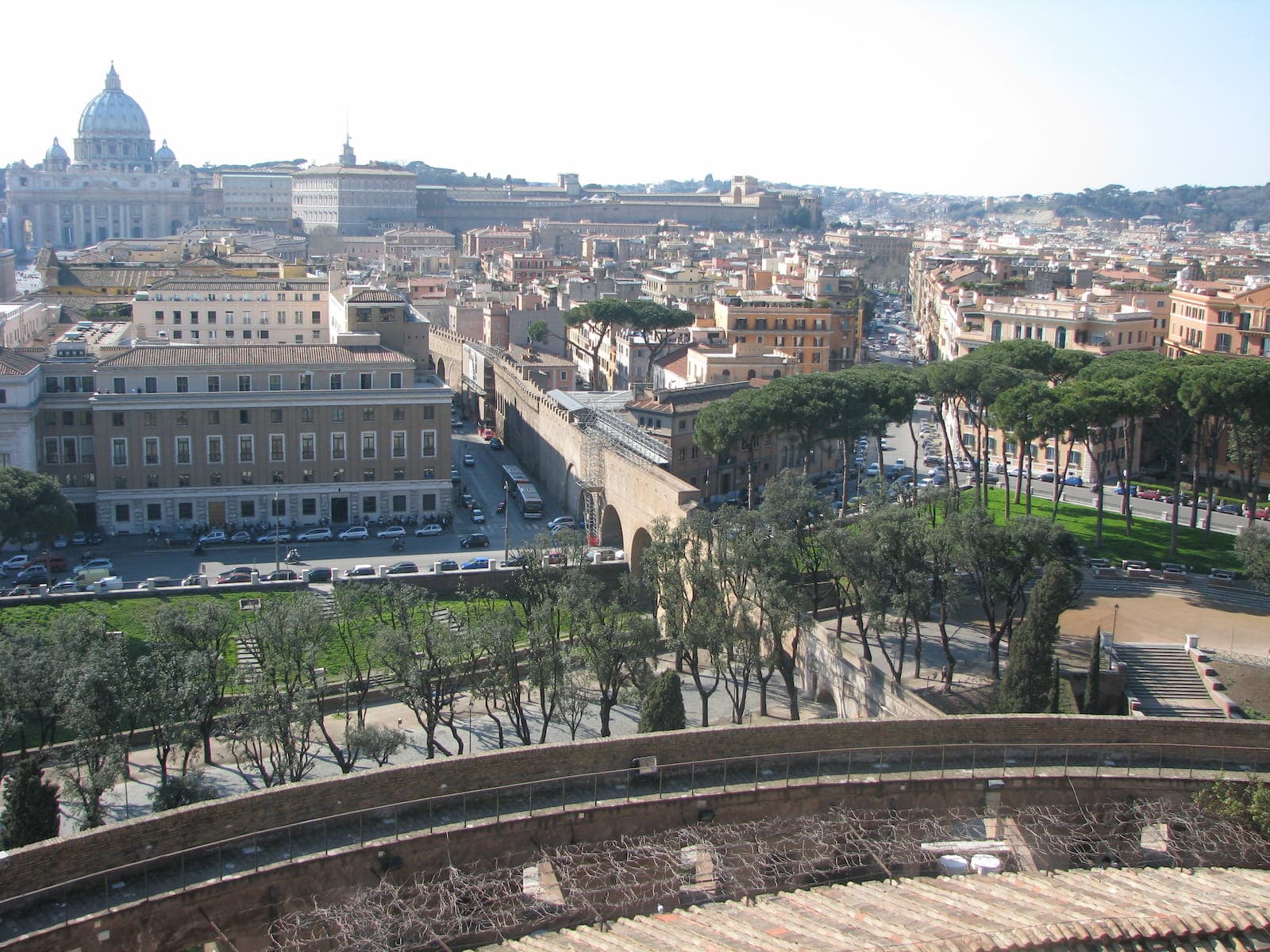
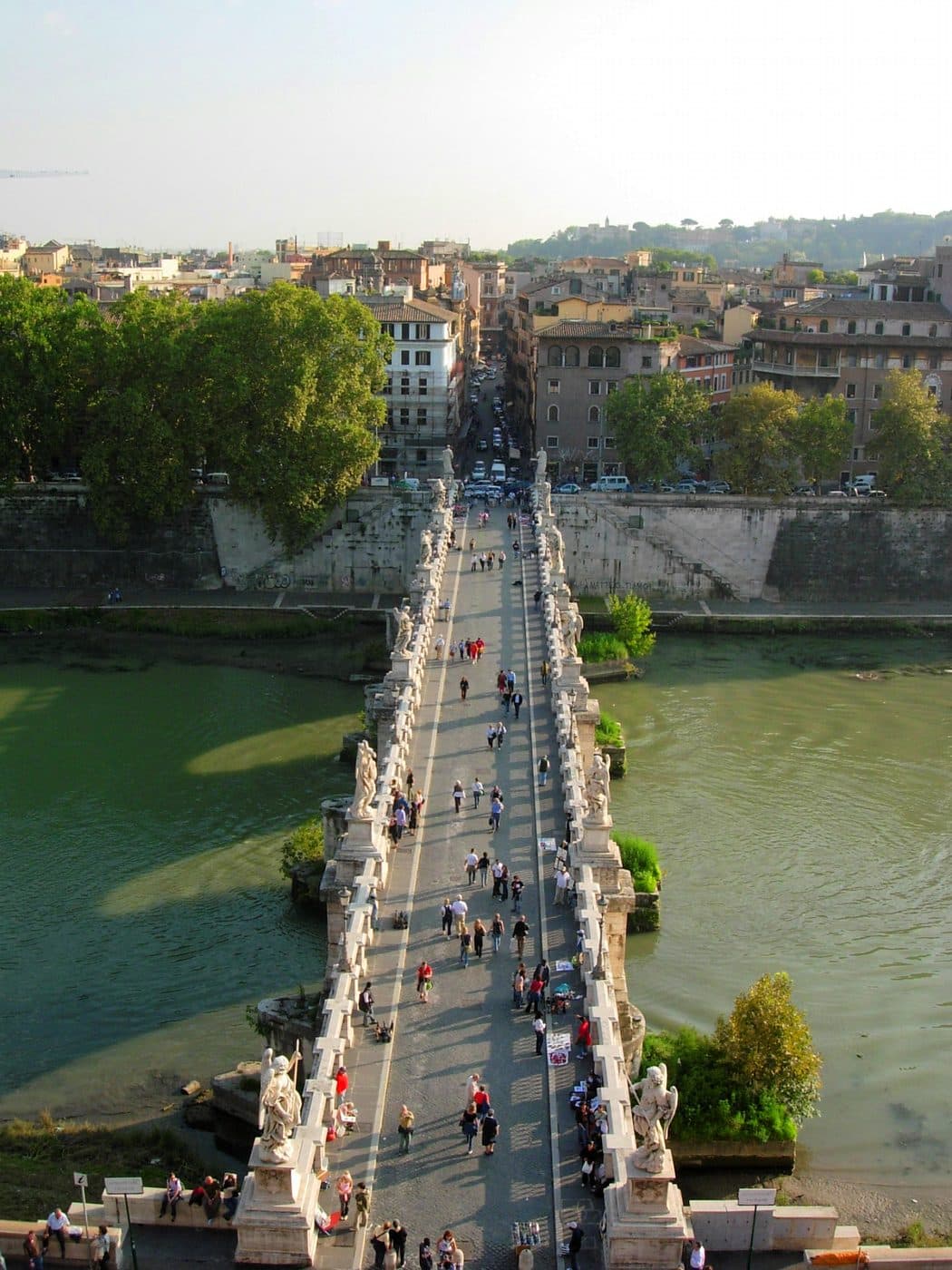
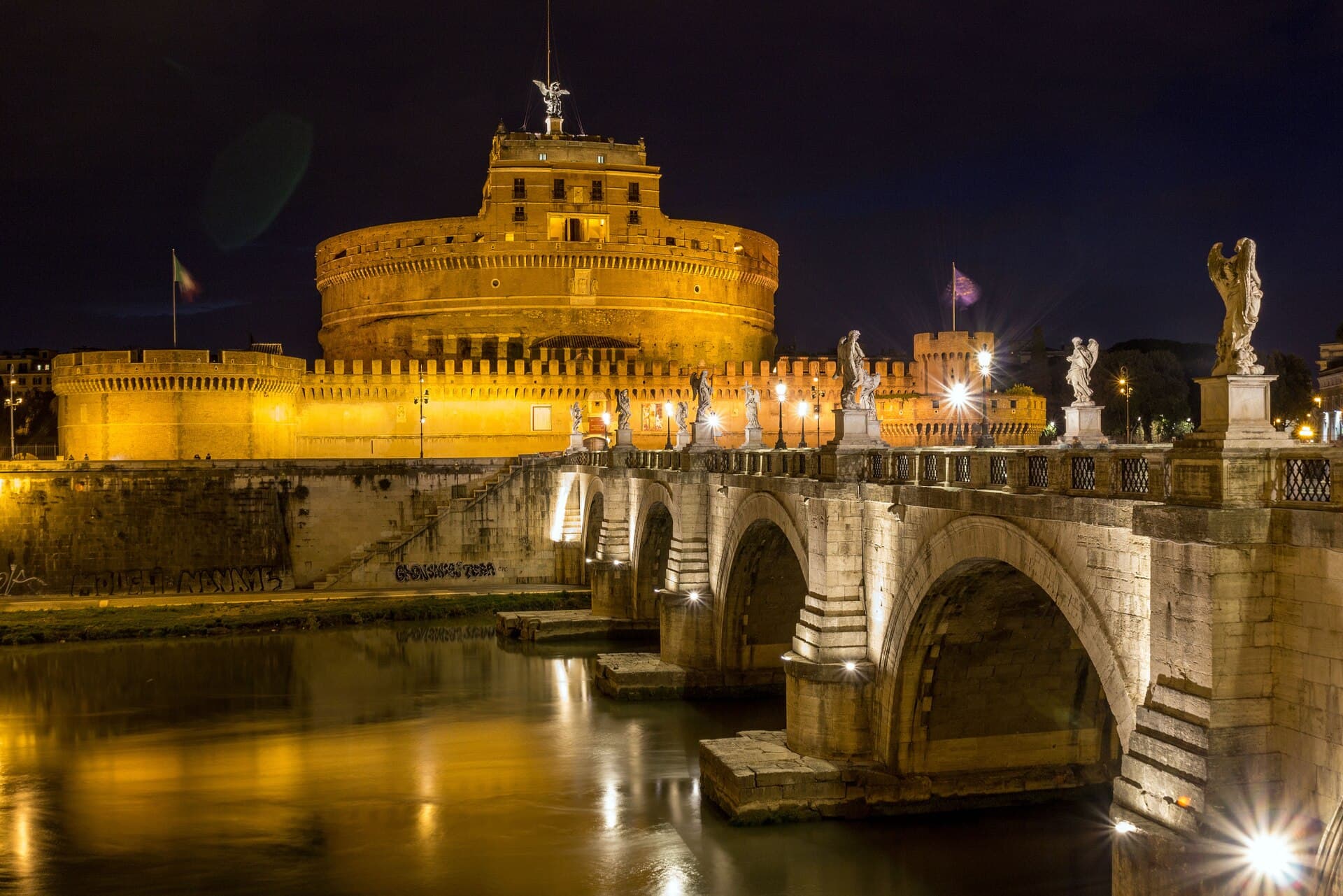
What you actually see on a visit is six levels of architecture layered over the original mausoleum: papal apartments with Renaissance frescoes, prison cells, fortified ramparts, and the Terrazza dell'Angelo — the rooftop terrace that takes its name from the bronze statue of Saint Michael the Archangel above it, cast by the Flemish sculptor Peter Anton Verschaffelt in 1752 and still in place today. From here the view reaches across Ponte Sant'Angelo and the Tiber to St Peter's Basilica, the domes of Rome, and the Alban Hills beyond — one of the great panoramic views of the city, and the reason most visitors remember the climb.

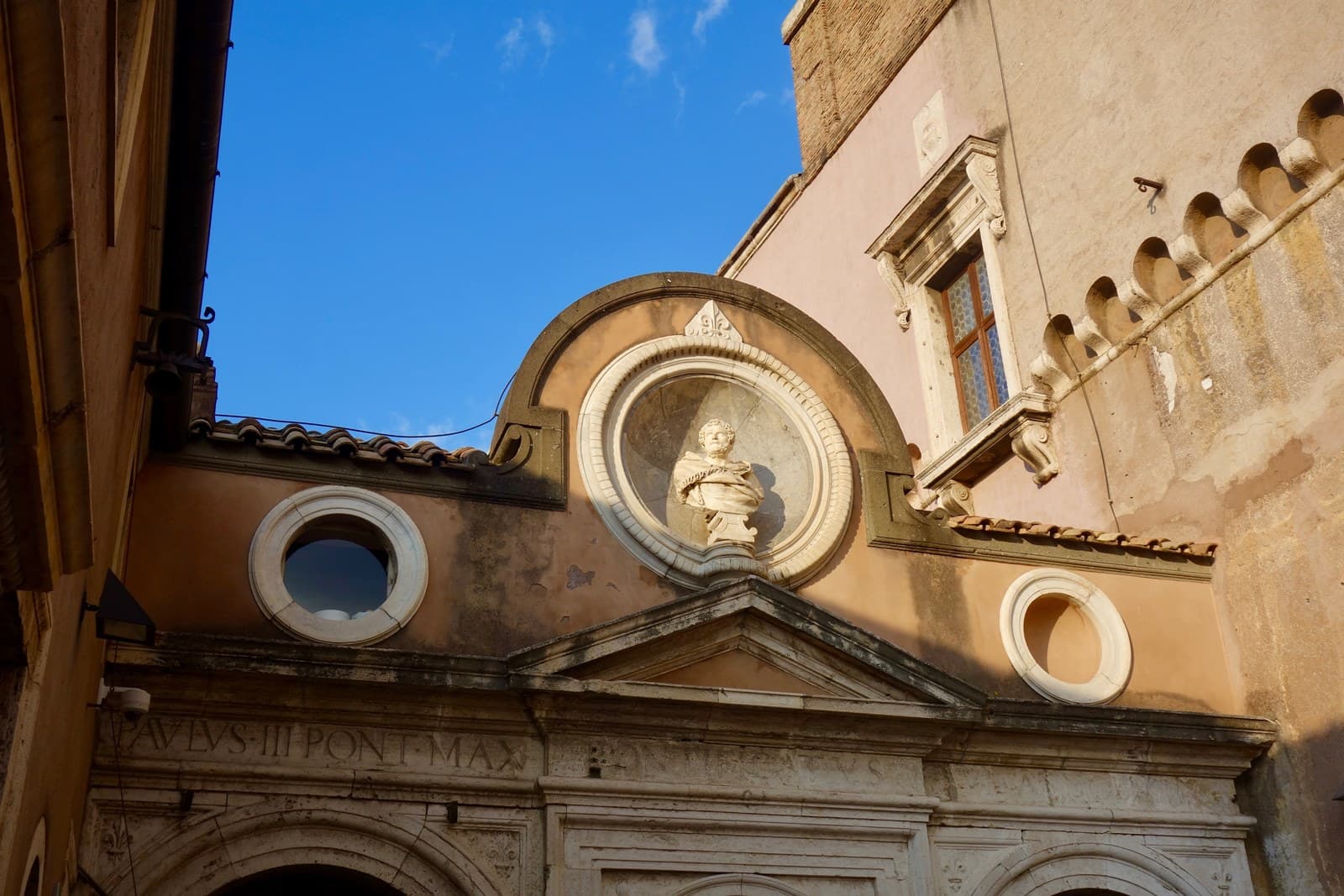
The marble angel that Verschaffelt's bronze replaced, carved by Raffaello da Montelupo in 1544, still stands in the open courtyard below — the Cortile dell'Angelo, named after it. You pass through it on the way up.

Most visitors spend 1.5 to 2 hours inside. If you are also walking the Angels & Demons route, or combining with the Vatican, plan for a full morning.
Four stories that made this castle legendary

Two thousand years of history, condensed into the episodes that have passed into literature, opera, cinema, and the collective memory of Rome.

Where to stay near Castel Sant'Angelo

The neighbourhoods around the castle — Borgo on the Vatican side, and the streets of the Centro Storico just across Ponte Sant'Angelo — are among the quietest and most walkable parts of central Rome. We've reviewed ten hotels and apartments within walking distance, with combined Booking and Google ratings. Once you've picked a place to sleep, our restaurant guide covers the best trattorias and cafés a few minutes away.

Independent reviews. Bookings processed by Booking.com at their listed prices.

Frequently asked questions

Quick answers to the questions most visitors ask before planning their visit.

What is Castel Sant'Angelo?

+

Castel Sant'Angelo is a cylindrical fortress and museum in Rome, Italy, originally built in 139 AD as the mausoleum of Emperor Hadrian. Today it is the National Museum of Castel Sant'Angelo (Museo Nazionale di Castel Sant'Angelo), managed by the Direzione Musei Nazionali di Roma. It stands on the right bank of the Tiber River and is connected to the Vatican by the Passetto di Borgo, an 800-metre fortified corridor.

Is Castel Sant'Angelo the same as Hadrian's Mausoleum?

+

Yes. Castel Sant'Angelo and Hadrian's Mausoleum (Mausoleo di Adriano, also called Mole Adriana) refer to the same building. The structure was originally built between 123 and 139 AD as the burial place of Emperor Hadrian and his family. It was renamed Castel Sant'Angelo in 590 AD after Pope Gregory the Great's vision of the Archangel Michael during a plague procession.

Is Castel Sant'Angelo worth visiting?

+

Yes — especially for travellers interested in Roman history, Renaissance art, or panoramic views of Rome. The castle offers six architectural layers in one building: Hadrian's 2nd-century mausoleum, medieval fortifications, Renaissance papal apartments, and a rooftop terrace with one of the widest views in the city. It's less crowded than the Vatican and the Colosseum, and usually takes less time.

How much does it cost to visit Castel Sant'Angelo?

+

Standard entry to Castel Sant'Angelo costs €16 for adults. EU citizens aged 18-25 pay a reduced fare of €2, and visitors under 18 enter free. Admission is free on the first Sunday of every month as part of the "Domenica al Museo" programme. Skip-the-line tickets and guided tours start from around €18.

How long do you need to visit Castel Sant'Angelo?

+

Most visitors spend 1.5 to 2 hours inside the castle. This covers the spiral ramp, the papal apartments, the Sala Paolina frescoes, and the rooftop Terrazza dell'Angelo. Allow an extra 30-45 minutes if you plan to walk the Passetto di Borgo or combine the visit with a guided tour.

When is the best time to visit Castel Sant'Angelo?

+

Early morning (9:00-10:30) and late afternoon (16:30-18:00) are the least crowded times. Spring (March-May) and autumn (September-October) offer the best balance of weather and crowds. Avoid weekends and the first Sunday of the month, when free entry brings significantly higher visitor numbers. The rooftop terrace is most photogenic at sunset.

Is Castel Sant'Angelo wheelchair accessible?

+

Partially. The lower levels — including the entrance, the Atrium, and parts of the helical ramp — are accessible. An elevator is available on request to reach the upper papal apartments and the Terrazza dell'Angelo, though some sections of the historical route still involve steps and uneven floors. Visitors with reduced mobility can contact the museum staff at the entrance for assistance. See our accessibility guide for details.

Can you take photos inside Castel Sant'Angelo?

+

Yes. Photography for personal use is permitted in most areas of Castel Sant'Angelo, including the papal apartments, the rooftop terrace, and the courtyards. Flash photography and tripods may be restricted in certain frescoed rooms (such as the Sala Paolina). Commercial photography requires advance authorization from the museum administration.

Is admission free on the first Sunday of the month?

+

Yes. Castel Sant'Angelo participates in the Italian Ministry of Culture's "Domenica al Museo" programme, which makes entry free on the first Sunday of every month. Free Sundays attract significantly more visitors and longer queues. Booking is not possible for free entry, so arrive early. Skip-the-line tickets are not available on these days.

Is it worth booking a guided tour of Castel Sant'Angelo?

+

For most visitors, yes. Castel Sant'Angelo is a layered monument — a Roman mausoleum, a medieval fortress, a Renaissance papal palace and a Baroque prison, all in the same building — and the layers are not obvious without context. A guided tour helps you recognise what you are looking at: the spiral ramp built for Hadrian's funeral procession, the frescoes of the Sala Paolina celebrating Pope Paul III, the Cagliostra where Count Cagliostro spent his final imprisonment, or the Passetto di Borgo that saved Clement VII during the Sack of Rome in 1527. Independent visits work well for travellers who read in advance. For everyone else, a good guide turns a pleasant walk into a story that sticks.

Is skip-the-line worth it at Castel Sant'Angelo?

+

During peak months (April-October) and especially on weekends, skip-the-line tickets save 30-60 minutes of queuing. During low season (November-February), the regular line moves quickly and skip-the-line offers less value. If your schedule in Rome is tight, it's usually worth the small premium.

Can you visit Castel Sant'Angelo at night?

+

The castle occasionally opens for special evening events and summer night tours, typically between June and September. These are not part of the regular schedule — standard opening hours close at 7:30 PM (last admission 6:30 PM). Check the official CoopCulture calendar or book a scheduled night tour if available.

Why this site

Castel Sant'Angelo is one of Rome's most iconic monuments — and also one of the least well documented online. Most guides either list tickets or summarize Wikipedia. This site does neither.

Every page here is verified against primary sources: the official brochure from the Direzione Musei Nazionali di Roma, CoopCulture (the official ticket concessionaire), and the Italian Ministry of Culture. When something changes, we update it and note the date.

Tour bookings are processed by trusted partners at their listed prices with no markup. We earn a small commission on bookings made through our links, which funds independent content about the castle.

Reviewed by a Google Local Guide (Level 8) based on on-site visits and primary sources.

Last verified: April 20, 2026. Content checked against official sources.