Castel Sant'Angelo Stories
History, culture, and the ghosts of Rome's most storied castle
Castel Sant'Angelo has been a Roman tomb, a Gothic stronghold, a papal fortress, a treasury, a refuge from invasion, and the most feared prison in Italy. Its real history reads like fiction, and fiction has rarely needed to invent much. The pages below are long-form pieces about the episodes — historical and cultural — that shaped its name.
At a glance
This page is the editorial home for our long-form stories on Castel Sant'Angelo. Below you'll find our most-read history pieces — from Hadrian's Ponte Sant'Angelo (134 AD) to the imprisonment of Cagliostro (1789) — and our coverage of the castle in culture: novels, film, opera, and video games. For the complete chronological catalogue, visit the history hub or the culture hub.
Why these stories matter
The castle's position — on the right bank of the Tiber, at the end of Hadrian's bridge, immediately adjacent to the Vatican — turned it into a stage where the most consequential moments of Roman history played out. Popes fled through its corridor when the city burned. Renaissance artists were imprisoned in its cells. Public executions took place on the bridge that leads to its gate. Operas and novels ended on its terrace.
These stories are not curiosities. They are the reason the castle has been one of the most painted, written about, and filmed buildings in Europe for four centuries. And they are the reason a modern visit to the castle works best when you know what happened in each room before you walk in. For the full chronological sweep, see our 24-milestone timeline from 139 AD to 1925.
Featured history
Browse all 6 history stories →Three of our most-read pieces on documented episodes that took place within the castle and on the bridge before its gate, from the second century to the eighteenth.
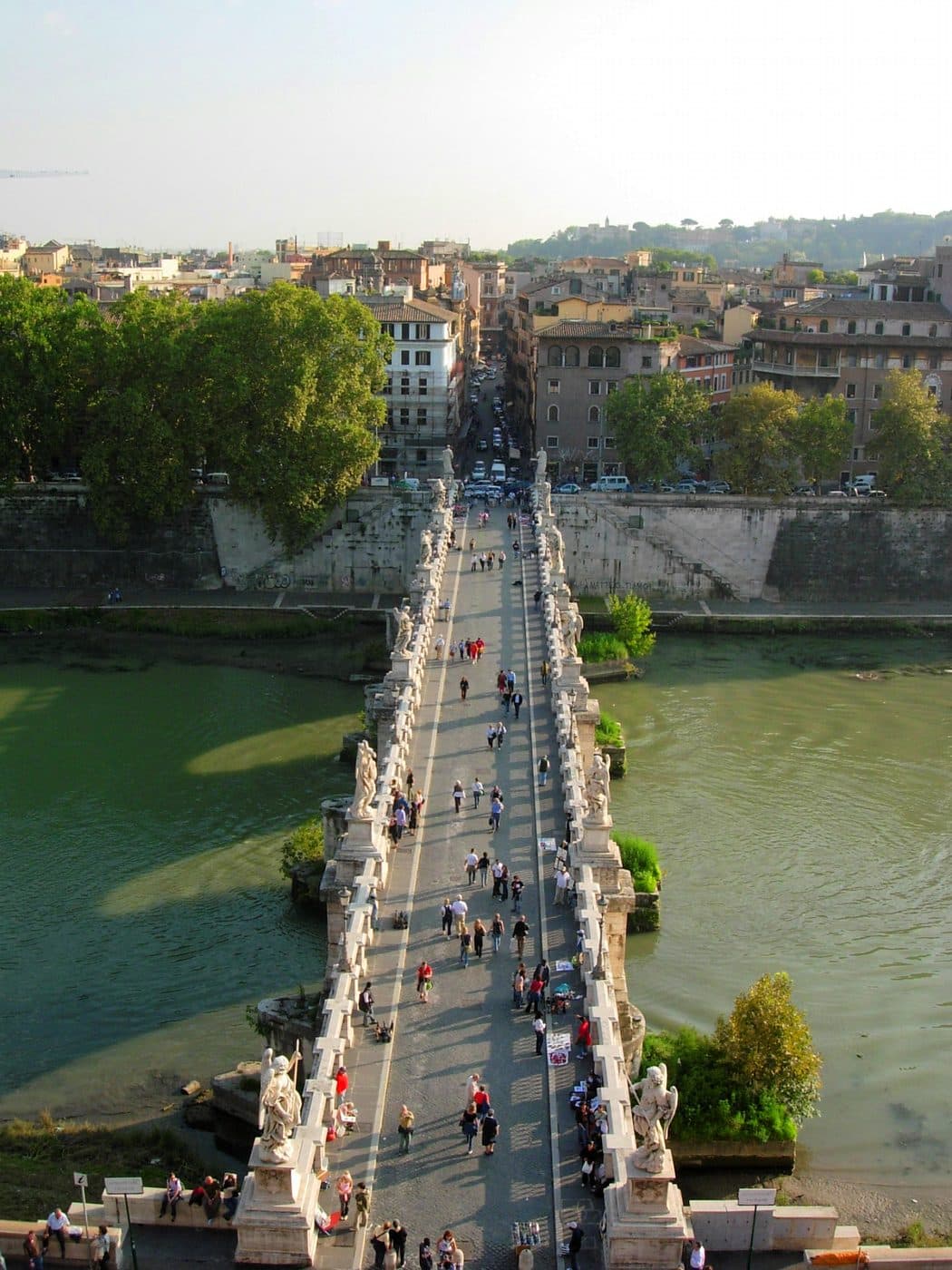
Ponte Sant'Angelo
Hadrian's bridge to his own mausoleum, redesigned by Bernini in 1669 with ten Baroque angels carrying the instruments of the Passion. Site of the 1450 Jubilee tragedy and three centuries of public executions.
Read the story →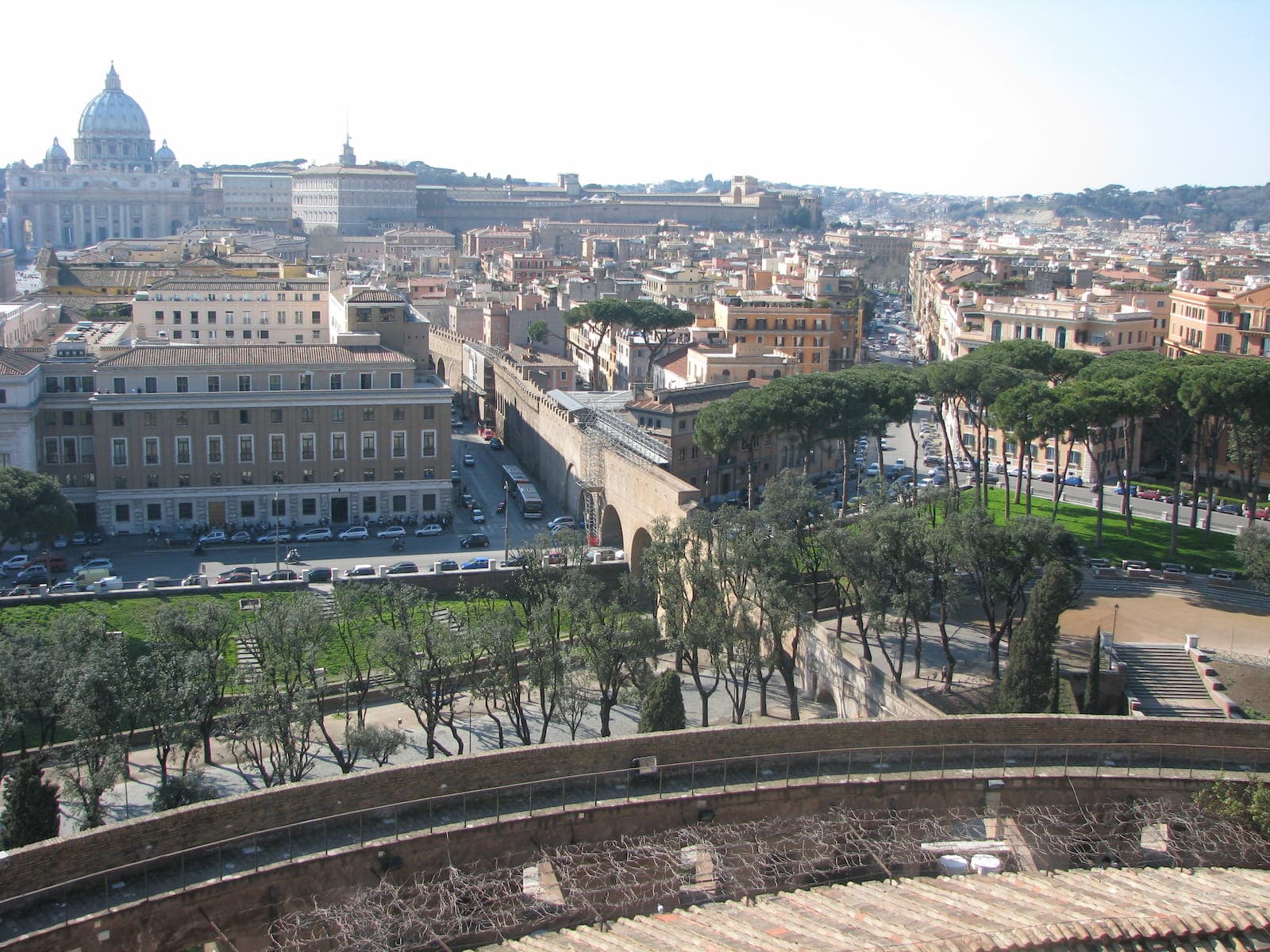
The Passetto di Borgo
The 800-metre fortified corridor that twice saved the papacy. Built by Pope Nicholas III on top of the ninth-century Leonine Walls, the Passetto allowed popes to flee from the Vatican to Castel Sant'Angelo in moments of crisis. After a major restoration, it reopened to the public in late 2024.
Read the story →
Beatrice Cenci
A young Roman noblewoman, executed on the bridge beside the castle in 1599 for the killing of her abusive father. Her story inspired Shelley, Stendhal, Dumas, and four centuries of artists.
Read the story →Featured culture
Browse all cultural pieces →The castle as it appears in novels, film, opera, and video games — from Puccini's Tosca to Dan Brown's Angels & Demons.
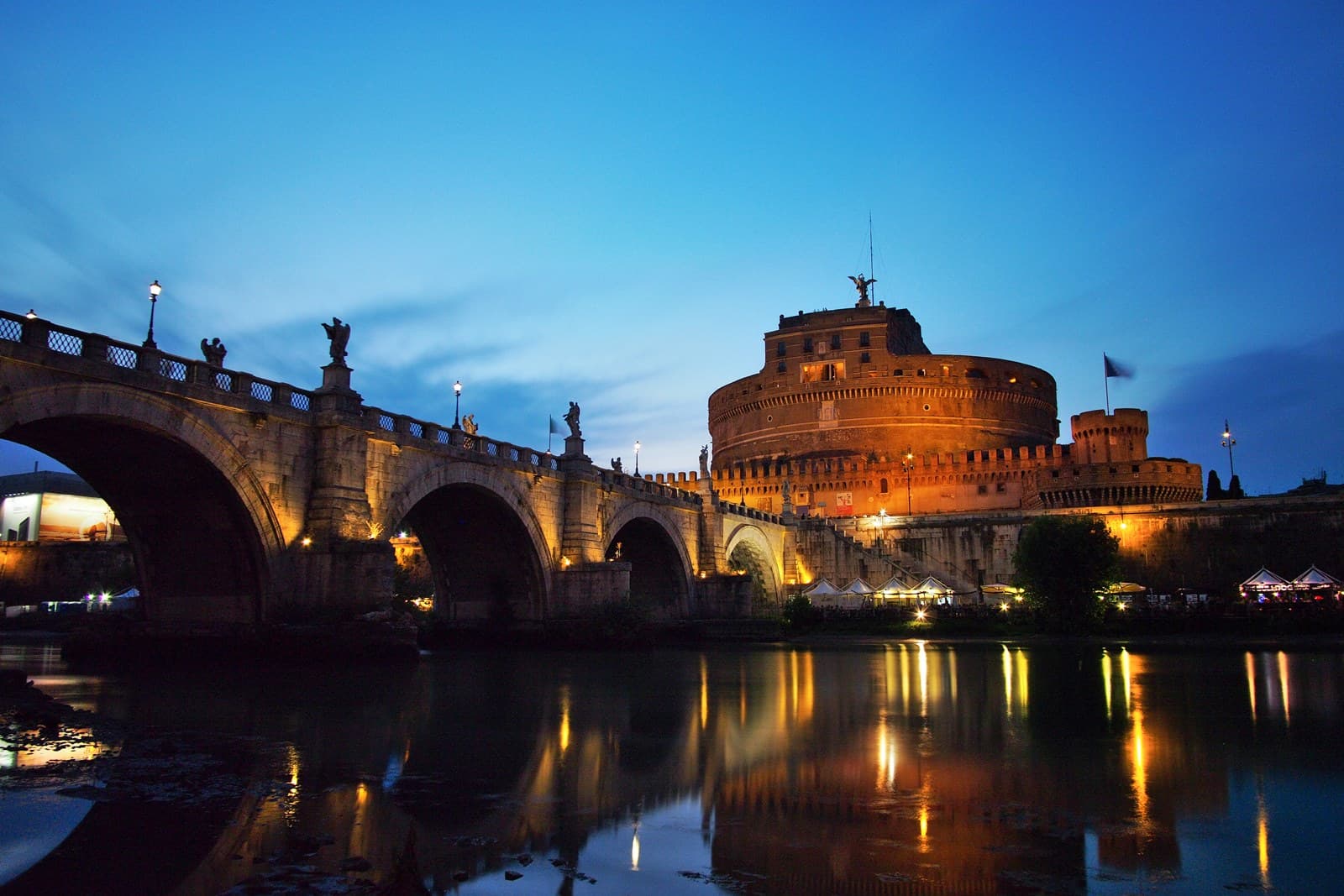
Tosca
Puccini's opera ends on the rooftop of Castel Sant'Angelo. Cavaradossi sings "E lucevan le stelle" before the firing squad; Tosca leaps from the battlements at dawn. The full story of why Puccini chose this castle, and how he stitched the actual sound of its bells into the score.
Read the story →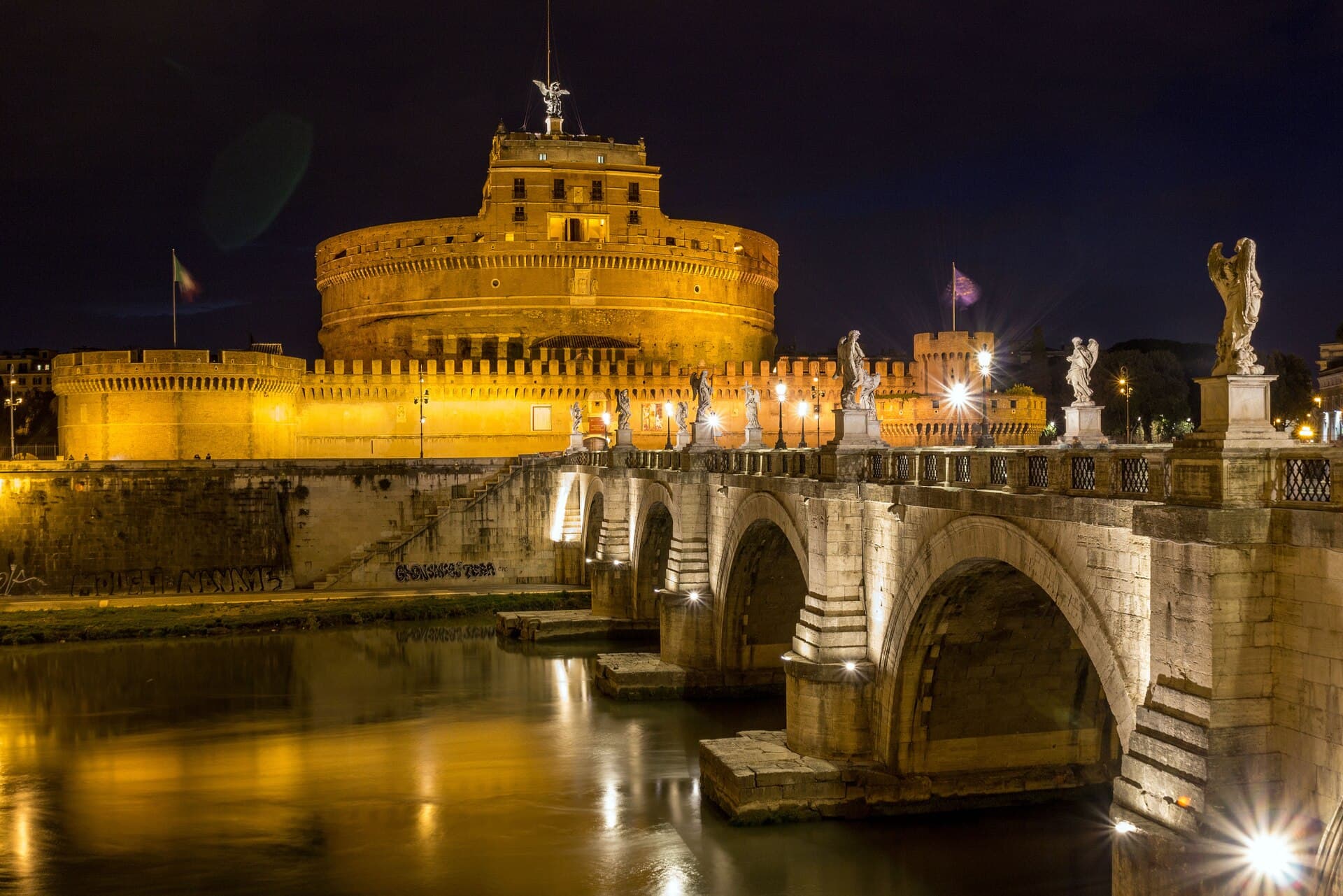
Angels & Demons
Dan Brown's thriller and the 2009 Ron Howard film climax at the castle — the "Church of Illumination." A guide to every real Roman location in the Path of Illumination, and what the novel changes.
Read the story →Frequently asked questions
Why is Tosca's third act set at Castel Sant'Angelo?▾
What is the most important story about Ponte Sant'Angelo?▾
Who was Beatrice Cenci?▾
Did Benvenuto Cellini really escape from Castel Sant'Angelo?▾
Is Angels & Demons based on a true story?▾
What happened during the Sack of Rome in 1527?▾
Why does Castel Sant'Angelo inspire so many stories?▾
Where can I see the rooms mentioned in these stories?▾
See these places in a real visit
The rooms mentioned in these stories — the Cagliostra, the Sala Paolina, the Sala di Apollo, the prisons, the Passetto di Borgo, the Terrazza dell'Angelo where Tosca leaps, the bridge of Bernini's angels — are all part of the same modern museum visit.
Practical resources to plan a visit:
- All tours of Castel Sant'Angelo — guided, private, skip-the-line, including tours that access the Passetto di Borgo.
- Tickets and prices — official entry costs and reduced fares.
- Opening hours — the castle is closed on Mondays.
- Accessibility — wheelchair access, elevator, historic flooring.
- Things to do nearby — pair the castle with the Pantheon, St Peter's, or the historic centre on three half-day routes.
More stories coming soon
The castle in Mission: Impossible III, in Assassin's Creed Brotherhood, the diary of Mastro Titta — the executioner of the Papal States who carried out 514 condemnations from 1796 to 1864, most of them at the eastern foot of Ponte Sant'Angelo — and a long-form piece on Bernini's ten angels of the bridge.
About this page
Edited by Gabriel G, a Google Maps Local Guide (Level 8) who has contributed reviews, photos, and corrections to Rome's cultural heritage sites over several years.
All historical content is verified against primary and institutional sources: the official brochure and timeline from the Direzione Musei Nazionali di Roma, CoopCulture (official ticket concessionaire of Castel Sant'Angelo), the Italian Ministry of Culture, and where relevant the Dizionario Biografico degli Italiani (Treccani). For cultural content, references include original libretti and scores (Casa Ricordi for Tosca), original novels, and screenplays.